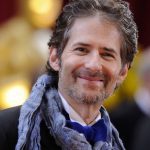
Cover Photo by Canadian Film Centre
Master the art of film music composition with everything you need to know about creating impactful scores. Complete Collection Study Pack (Enter 25FMT at the checkout for instant 25% off)

Howard Shore is a titan of film composition, whose career has spanned over four decades and includes some of the most iconic scores in cinematic history. From his early days in Toronto to his groundbreaking work on The Lord of the Rings trilogy, Shore’s life is a testament to the power of music in storytelling. This article will explore the life and career of this remarkable composer, delving into his most notable works and the impact he has had on the film industry.
Early Life and Musical Beginnings
Howard Leslie Shore was born on October 18, 1946, in Toronto, Canada[1][5]. From an early age, Shore displayed a prodigious musical talent, beginning his formal music studies at the age of eight[1]. His early exposure to music would lay the foundation for a career that would see him become one of the most respected composers in the film industry.
Shore’s musical education continued at the Berklee College of Music in Boston, where he honed his skills and expanded his musical horizons[4][9]. This formal training, combined with his natural talent and passion for music, would prove invaluable in his future career as a film composer.
After graduating from Berklee, Shore moved to New York City, where he began working as a music director for various television shows and commercials[6]. This experience in the fast-paced world of television would prepare him for the demanding schedule of film composition.
Breaking into Film: Early Collaborations with David Cronenberg
Shore’s entry into the world of film composition came in 1978 with the low-budget thriller I Miss You, Hugs and Kisses (1978)[5]. However, it was his collaboration with director David Cronenberg that would truly launch his career in film scoring.
Shore’s first major film score was for Cronenberg’s The Brood (1979)[5]. This marked the beginning of a long and fruitful partnership between the two Canadians. Shore would go on to score almost all of Cronenberg’s subsequent films, with the exception of The Dead Zone (1983)[5].
The Cronenberg-Shore collaboration produced some of the most memorable and unsettling scores in horror and psychological thriller cinema. Films like Videodrome (1983), The Fly (1986), and Dead Ringers (1988) showcased Shore’s ability to create atmospheric and emotionally charged music that perfectly complemented Cronenberg’s unique visual style[1][5].
Expanding Horizons: The 1980s and 1990s
As Shore’s reputation grew, he began to work with other notable directors. In 1985, he composed the score for Martin Scorsese’s “After Hours”, marking the beginning of another significant collaboration in his career[5].
The late 1980s and early 1990s saw Shore further diversify his portfolio. He composed the score for Penny Marshall’s “Big” (1988), starring Tom Hanks, demonstrating his versatility in handling lighter, more whimsical material[1][5].
However, it was his work on Jonathan Demme’s “The Silence of the Lambs” (1991) that truly catapulted Shore into the upper echelons of film composers. The haunting, atmospheric score earned Shore his first BAFTA nomination and contributed significantly to the film’s tense, psychological atmosphere[1][5].
The Lord of the Rings: A Monumental Achievement
While Shore had already established himself as a respected film composer by the turn of the millennium, it was his work on Peter Jackson’s The Lord of the Rings trilogy that would define his career and cement his place in film music history.
Shore composed over 10 hours of music for the three films, which were released between 2001 and 2003[6]. The scope and ambition of this undertaking were unprecedented. Shore created a complex musical landscape that mirrored the rich world of J.R.R. Tolkien’s Middle-earth, using leitmotifs to represent different characters, cultures, and themes[2][7].

The score for “The Fellowship of the Ring” (2001) introduced many of the key themes that would develop throughout the trilogy. Tracks like “Concerning Hobbits” established a sense of joy and innocence associated with the Shire, while “The Bridge of Khazad-dûm” mixed the stirring main theme with choral elements to create a sense of dread and epic struggle[2].
Shore’s use of different musical styles and instruments to represent the various cultures of Middle-earth was particularly noteworthy. He incorporated Celtic influences for the Shire, Norse-inspired themes for the Rohirrim, and Middle Eastern elements for the cultures of Harad and Rhûn[7].
The scores for “The Two Towers” (2002) and “The Return of the King” (2003) built upon and expanded these themes, creating a cohesive musical narrative that spanned the entire trilogy. Shore’s work on these films earned him three Academy Awards, three Golden Globes, and four Grammy Awards, among numerous other accolades[1][5][6].
Continued Success and Collaborations
Following the monumental success of “The Lord of the Rings”, Shore continued to work on high-profile projects. He reunited with Martin Scorsese for “The Aviator” (2004), winning a Golden Globe for his score that captured the glamour and turbulence of Howard Hughes’ life[1][4].

Shore’s collaboration with David Cronenberg also continued, with notable works including “A History of Violence” (2005) and “Eastern Promises” (2007). The latter film’s score was particularly praised for its use of traditional Eastern European elements to enhance the film’s exploration of the criminal underworld[4].
In 2006, Shore worked again with Scorsese on “The Departed”, contributing to the film’s tense atmosphere and helping it secure four Academy Awards, including Best Picture[5].
The Hobbit Trilogy and Beyond
Shore returned to Middle-earth with Peter Jackson’s “The Hobbit” trilogy (2012-2014). While building on the musical world he had created for “The Lord of the Rings”, Shore also introduced new themes and motifs to represent the different characters and situations in this prequel series[5][6].
Beyond his film work, Shore has also ventured into other musical realms. He composed the opera “The Fly”, based on Cronenberg’s 1986 film, which premiered at the Théâtre du Châtelet in Paris in 2008[5]. He has also written concert works, including “Fanfare for the Wanamaker Organ and the Philadelphia Orchestra”[5].
More recently, Shore has continued to work on diverse projects, including the Netflix series “The Umbrella Academy” and the 2016 Best Picture winner “Spotlight”[6][9].
Shore’s Compositional Style and Approach
Howard Shore’s compositional style is characterized by its emotional depth, sweeping melodies, and intricate orchestrations[6]. He is known for his use of leitmotifs, musical themes associated with specific characters or ideas, a technique he employed to great effect in “The Lord of the Rings” trilogy[6][7].
Shore’s approach to film scoring is highly collaborative. He works closely with directors to understand their vision and how music can enhance the storytelling. His long-standing collaborations with directors like David Cronenberg and Martin Scorsese are testament to his ability to adapt his style to different filmmakers’ needs while maintaining his unique voice[1][4][5].
One of Shore’s strengths is his ability to create music that not only supports the on-screen action but also adds depth to the narrative. His scores often act as an additional character in the film, providing emotional cues and thematic development that enrich the viewer’s experience[7].
Shore is also known for his use of unusual instruments to create unique sounds. In “The Lord of the Rings”, for example, he incorporated instruments like the Hardanger fiddle, the monochord, and the rhaita to evoke the different cultures of Middle-earth[7].
His Legacy!
Howard Shore’s contribution to film music is immeasurable. His scores have enhanced some of the most critically acclaimed and popular films of the past four decades. The breadth of his work, from intimate character studies to epic fantasies, showcases his versatility and depth as a composer.
Shore’s work on “The Lord of the Rings” trilogy, in particular, has had a lasting impact on film music. The scope and complexity of these scores raised the bar for what could be achieved in film composition. The use of thematic development across multiple films created a new standard for musical storytelling in cinema[2][6][7].
Beyond his film work, Shore has also made significant contributions to concert music and opera. His ability to move between these different musical worlds demonstrates his versatility as a composer and his deep understanding of musical form and structure[5].
Shore’s influence can be heard in the work of many contemporary film composers. His approach to thematic development and his skill in creating immersive musical worlds have inspired a new generation of composers. As Shore continues to compose, his legacy in the world of film music is already secure. His work has not only enriched countless films but has also expanded our understanding of what film music can achieve. For aspiring composers and film music enthusiasts alike, Howard Shore’s career serves as an inspiration and a masterclass in the art of film scoring.
Citations:
[1] https://www.imdb.com/name/nm0006290/
[2] https://movieweb.com/howard-shore-best-musical-scores-ranked/
[3] https://www.youtube.com/watch?v=EmSxW2ExVKs
[4] https://filmmusictheory.com/article/howard-shore-the-maestro-of-cinematic-soundscapes/
[5] https://en.wikipedia.org/wiki/Howard_Shore
[6] https://www.yellowbrick.co/blog/music/howard-shore-the-masterful-composer-behind-iconic-film-scores
[7] https://www.youtube.com/watch?v=Azd7lyJ4918
[8] https://soundtrackworld.com/2020/01/interview-howard-shore/
[9] https://college.berklee.edu/people/howard-shore
[10] https://www.youtube.com/watch?v=j-D4n8WrGFw
This post was brought to you in collaboration with our partner site Behind the Score. Discover the Harmony Secrets of Modern Film and Video Games.
Master the art of film music composition with everything you need to know about creating impactful scores. Complete Collection Study Pack (Enter 25FMT at the checkout for instant 25% off)