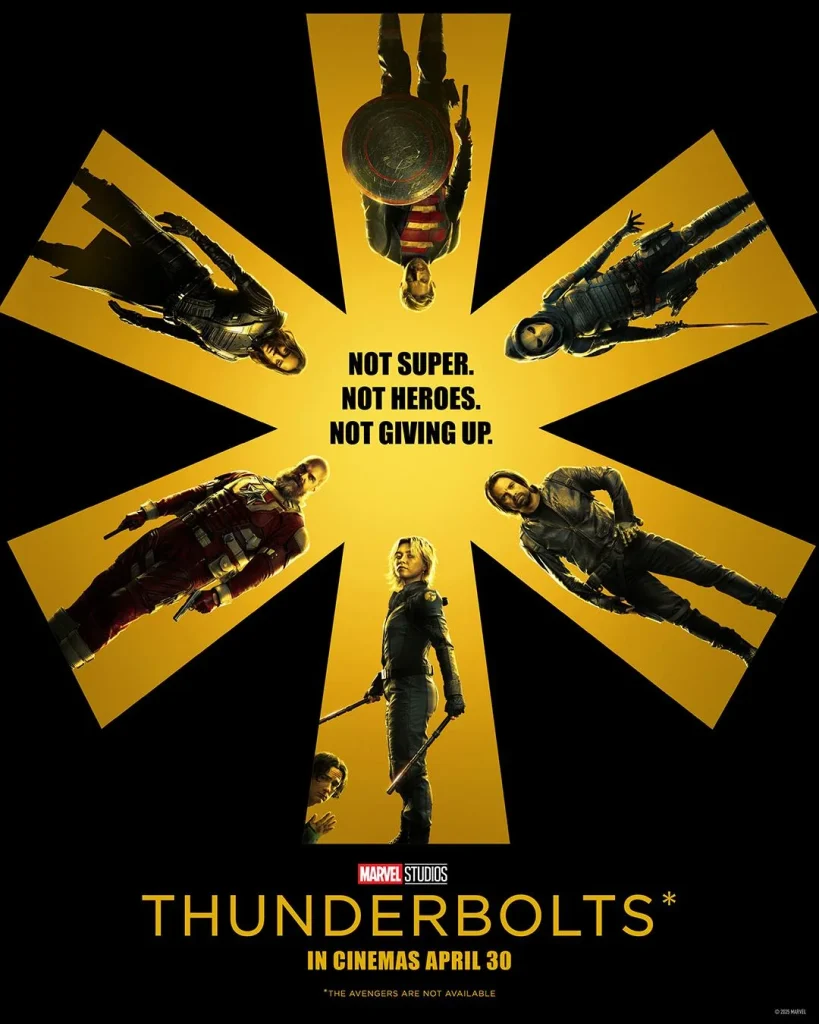

Known for their groundbreaking work on “Everything Everywhere All at Once” and their genre-defying approach to composition, Son Lux seemed like an unconventional choice for the Marvel Cinematic Universe. However, as Hollywood Records released the digital soundtrack on April 30, 2025, it became clear that this experimental approach was exactly what the franchise needed to tell the story of its most unconventional heroes.
The Academy Award-nominated trio—comprised of Ryan Lott, Ian Chang, and Rafiq Bhatia—brought their distinctive blend of electronic experimentation, orchestral arrangements, and avant-garde sensibilities to the world of superheroes. The result is a score that fits perfectly with Jake Schreier’s film and serves as a fantastic addition to the MCU, offering something completely different from the typical superhero soundtrack formula.
Recording at Abbey Road Studios
The band Son Lux began recording the score for Thunderbolts* at Abbey Road Studios in London in the first week of February 2025, bringing their experimental approach to one of the world’s most prestigious recording facilities. The choice of Abbey Road Studios, famous for its work with The Beatles and countless other legendary artists, provided the perfect blend of traditional orchestral recording capabilities with the cutting-edge technology needed for Son Lux’s innovative soundscapes.
The recording process at Abbey Road allowed Son Lux to incorporate both live orchestral elements and their signature electronic manipulations, creating a sonic palette that could support both intimate character moments and large-scale action sequences. The studio’s legendary acoustics and state-of-the-art equipment proved essential in capturing the full dynamic range of Son Lux’s compositions, from delicate ambient textures to thunderous climactic moments.
A New Kind of Superhero Theme
One of the most challenging aspects of scoring a Marvel film is creating memorable themes that can stand alongside the iconic motifs established in previous MCU entries. Son Lux focused on creating a new superhero theme and foreshadowing it early in the film, developing musical ideas that would grow and evolve throughout the story as the team of antiheroes found their identity.
Unlike traditional superhero themes that often emphasize heroism and triumph, Son Lux’s approach to the Thunderbolts theme reflects the complex nature of these characters. Their musical motifs incorporate elements of uncertainty, redemption, and the struggle between good and evil that defines each team member. The experimental nature of the compositions mirrors the experimental nature of the team itself—a group of individuals trying to find their place in a world that doesn’t quite know what to make of them.
Musical Examples from the Film
There’s Something Wrong with Me
In the film: This opening track immediately establishes the psychological complexity of the Thunderbolts team members. The music reflects the internal struggles and self-doubt that plague these characters, using dissonant harmonies and fragmented melodies to represent their fractured psyches.
Trivia: At just 1:32 in length, this track demonstrates Son Lux’s ability to establish complex emotional landscapes in compressed timeframes. The title itself speaks to the self-perception issues that many of the characters grapple with throughout the film.
I Needed That Face
In the film: This brief but impactful 43-second track likely accompanies a moment of character revelation or transformation. The music supports a pivotal scene where identity and appearance play crucial roles in the narrative.
Trivia: The cryptic title suggests Son Lux’s willingness to embrace the more surreal and psychological aspects of superhero storytelling, moving beyond traditional action-adventure scoring into more experimental territory.
The Light Inside You Is Dim
In the film: This track explores themes of hope and redemption, likely underscoring moments where characters confront their past mistakes and begin to see possibilities for change. The music balances darkness with emerging light, reflecting the complex journey from villain to hero.
Trivia: The poetic title exemplifies Son Lux’s literary approach to track naming, treating each piece as part of a larger narrative arc that extends beyond mere functional film scoring.
It’s Bucky!
In the film: This track obviously features Bucky Barnes, also known as the Winter Soldier, and likely accompanies his entrance or a significant action sequence involving the character. The music would need to bridge his dark past as an assassin with his current role as a team member.
Trivia: The exclamatory title suggests either surprise, relief, or excitement associated with Bucky’s appearance, indicating Son Lux’s ability to capture specific emotional beats in their compositions.
First Flight
In the film: This track likely accompanies the team’s initial mission together or a character’s first successful use of their abilities within the group context. The music would emphasize the sense of newfound purpose and collaboration.
Trivia: “First Flight” suggests both literal and metaphorical interpretations, representing either actual flight sequences or the team’s first steps toward becoming true heroes.
Limo Chase
In the film: An action-oriented piece that scores what is presumably a high-speed chase sequence involving a limousine. Son Lux’s experimental approach to action scoring would bring unique rhythmic and textural elements to this traditional chase scene setup.
Trivia: The specificity of the title shows how Son Lux tailored their compositions to exact narrative moments rather than creating generic action cues, ensuring each piece serves the specific dramatic needs of individual scenes.
Welcome to the Watchtower
In the film: This track introduces audiences to the team’s headquarters or base of operations. The music would need to convey both the technological sophistication of their setup and the uncertain nature of their alliance.
Trivia: The Watchtower reference connects to larger superhero mythology while Son Lux’s treatment likely brings a fresh perspective to the familiar concept of a superhero headquarters.
Every Man for Himself
In the film: This piece likely accompanies a moment of team dissolution or conflict, where the characters’ selfish instincts override their commitment to working together. The music would emphasize isolation and internal conflict.
Trivia: The title reflects the antihero nature of the Thunderbolts, acknowledging that these characters haven’t fully embraced selfless heroism and still struggle with their more self-serving impulses.
Maybe We’ll All Get Out of Here Alive
In the film: This track probably underscores a particularly dangerous mission or climactic battle where survival is uncertain. The music would balance hope with genuine fear, reflecting the realistic stakes these characters face.
Trivia: The tentative optimism in the title (“maybe”) exemplifies Son Lux’s nuanced approach to heroism, acknowledging that victory isn’t guaranteed and that these characters exist in a morally complex world.
Introducing Sentry
In the film: This track introduces the character of Sentry, one of Marvel’s most powerful and psychologically complex heroes. The music would need to convey both his incredible abilities and his mental instability.
Trivia: Sentry’s introduction requires particularly sophisticated scoring given the character’s dual nature as both a Superman-level hero and someone struggling with severe psychological issues, making it perfect for Son Lux’s experimental approach.
The Legacy of Experimental Scoring
The music for Thunderbolts* is a unique and refreshing addition to the Marvel universe, representing a significant evolution in how superhero films approach musical storytelling. Son Lux’s work demonstrates that experimental music techniques can serve blockbuster entertainment without sacrificing accessibility or emotional impact.
The success of this approach may influence future Marvel projects to take greater risks with their musical choices, moving away from the sometimes formulaic approach that has characterized some MCU entries. The experimental music group, known for their work on “Everything Everywhere All at Once,” brings their unique sound to the MCU, proving that avant-garde techniques can enhance rather than overshadow traditional superhero storytelling.
A New Chapter for Marvel Music
Son Lux’s score for Thunderbolts* represents more than just another film soundtrack—it’s a statement about the evolving nature of superhero cinema and the music that supports it. As the MCU continues to expand and explore more complex characters and themes, the willingness to embrace experimental approaches to scoring becomes increasingly important.
The collaboration between Son Lux and Marvel Studios demonstrates that audiences are ready for more sophisticated and challenging musical experiences within the superhero genre. Thunderbolts* deftly tackles mental health and serves as a fantastic MCU movie, with great performances, and Son Lux’s score provides the perfect sonic foundation for these deeper explorations of character and theme.
The Thunderbolts* soundtrack stands as evidence that experimental music and blockbuster entertainment can not only coexist but can elevate each other to create something truly special. As Marvel continues to push the boundaries of superhero storytelling, Son Lux has provided a roadmap for how music can evolve alongside these narrative innovations, creating scores that are both artistically adventurous and emotionally satisfying.