
Summary
The article covers Carter Burwell‘s original score, Jack Antonoff‘s production work, and original songs performed by the cast including Margaret Qualley (as Lace Manhattan), Aubrey Plaza, and Talia Ryder. It explores how the music enhances the neo-noir atmosphere of this small-town mystery about a private investigator delving into strange deaths tied to a mysterious church.
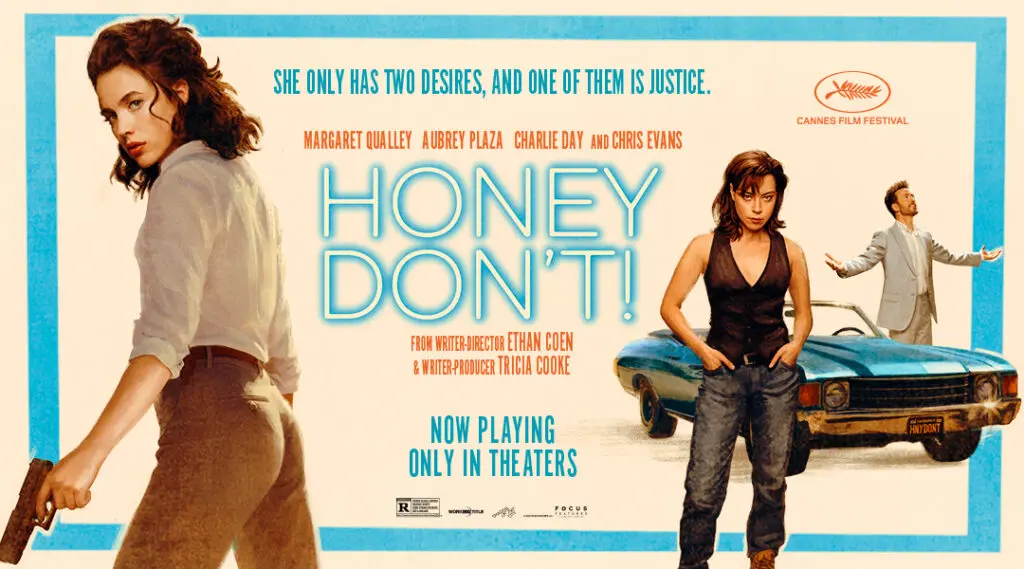
The latest offering from acclaimed filmmaker Ethan Coen, “Honey, Don’t!” presents a fascinating musical tapestry that perfectly complements its neo-noir aesthetic and lesbian B-movie sensibilities. Released on August 22, 2025, the soundtrack features original compositions by Academy Award nominee Carter Burwell alongside original songs written by Jack Antonoff and performed by the film’s talented cast. This musical collaboration creates an atmospheric foundation for the small-town mystery that follows private investigator Honey O’Donahue, played by Margaret Qualley, as she delves into a series of strange deaths connected to a mysterious church.
The Musical Architecture of Mystery
Carter Burwell, the legendary composer known for his work on “Carol,” “The Banshees of Inisherin,” “Fargo,” and “Three Billboards Outside Ebbing, Missouri,” brings his distinctive voice to the film’s score. Burwell’s approach to “Honey, Don’t!” demonstrates his masterful ability to create tension through subtlety, weaving musical motifs that enhance the film’s investigative narrative without overwhelming the story’s intimate character moments.
The soundtrack’s 14-track collection spans just 29 minutes, reflecting the film’s tight narrative structure and Coen’s preference for economical storytelling. This brevity allows each musical moment to carry significant weight in advancing both plot and character development.
Jack Antonoff’s Creative Collaboration
The soundtrack blends Carter Burwell’s score with tracks produced by Jack Antonoff, including a new recording by Brittany Howard and original songs by Lace Manhattan and Dixie Normus, the musical alter egos of Margaret Qualley and Talia Ryder. Jack Antonoff, known for his work with artists like Taylor Swift, Lana Del Rey, and The 1975, brings his contemporary production sensibilities to this period-influenced mystery.
The collaboration between Antonoff and Coen represents a fascinating intersection of modern pop production techniques with classic noir musical traditions. This blend creates a unique sonic identity that feels both timeless and distinctly contemporary.
Musical Examples from the Film
We Gotta Get Out of This Place
In the Film: Brittany Howard’s cover of the Animals’ classic opens the soundtrack and establishes the film’s restless energy. The song serves as an emotional anchor for Honey’s desire to escape the suffocating atmosphere of small-town secrets and corruption.
Trivia: Brittany Howard, lead vocalist of Alabama Shakes, brings her powerful vocal style to this 1960s classic originally performed by The Animals. Her interpretation adds contemporary soul influences while maintaining the song’s original urgency and desperation.
ODDWADD
In the Film: This original composition by Lace Manhattan (Qualley’s musical alter ego) serves as a character theme for Honey, playing during moments of introspection and self-discovery throughout her investigation.
Trivia: The cryptic title suggests the unconventional nature of both the character and the film itself, embodying the quirky sensibilities that Ethan Coen brings to his solo projects.
In the Sun She Lies
In the Film: A contemplative musical montage set to “In the Sun She Lies” occurs as Honey processes her niece’s disappearance and deepens her investigation into the suspicious church. This track serves as an emotional centerpiece for the film’s exploration of grief and determination.
Trivia: At over three minutes, this is one of the longest tracks on the soundtrack, allowing for extended musical development that mirrors Honey’s emotional journey throughout the investigation.
Little Black Star
In the Film: Another Lace Manhattan original that underscores Honey’s growing obsession with uncovering the truth. The song plays during pivotal moments when she pieces together crucial evidence.
Trivia: The track is arranged by John Jacob Niles and published by G. Schirmer, Inc. (ASCAP) courtesy of Wise Music Group, suggesting classical influences in its composition structure.
Girl
In the Film: A duet between Lace Manhattan and Dixie Normus (Talia Ryder’s musical persona) that explores themes of female solidarity and shared experience in the face of masculine threats and institutional corruption.
Trivia: At 3:14, this collaboration represents one of the soundtrack’s most substantial musical statements, featuring intricate harmonies and layered production typical of Antonoff’s style.
Honey Don’t! (Cast Recording)
In the Film: Margaret Qualley, Aubrey Plaza, and Talia Ryder perform this rendition of Carl Perkins’ classic, creating a moment of ensemble unity that bonds the three central female characters.
Trivia: The original “Honey Don’t” was written by Carl Perkins in 1955 and later covered by The Beatles. The cast’s interpretation brings a distinctly feminine perspective to this rockabilly classic.
Rough Love
In the Film: This brief but impactful score cue by Carter Burwell accompanies moments of romantic tension between Honey and various characters throughout the film.
Trivia: At just 1:25, the track demonstrates Burwell’s ability to create maximum emotional impact with minimal musical material, a hallmark of his compositional approach.
Did You See Heaven
In the Film: This haunting piece underscores the film’s exploration of religious themes and the mysterious church at the center of the conspiracy. The music creates an atmosphere of false spirituality and hidden menace.
Trivia: The track’s title suggests religious imagery while the musical content likely subverts traditional sacred music expectations, reflecting the film’s treatment of corrupted religious institutions.
Heidi Ho
In the Film: A brief musical interlude that provides comic relief while maintaining the film’s noir atmosphere. The track likely accompanies lighter moments that balance the story’s darker investigative elements.
Trivia: The playful title contrasts with the film’s serious themes, showcasing Coen’s ability to blend humor with suspense throughout the narrative.
Cast Performances and Musical Storytelling
Margaret Qualley’s Musical Persona
Margaret Qualley, who is married to Jack Antonoff, performs under the moniker Lace Manhattan throughout the film. Her musical performances serve as both character development tools and narrative devices, revealing aspects of Honey O’Donahue’s personality that dialogue alone cannot convey. The choice to have Qualley perform original material rather than covering existing songs allows for a more integrated approach to character-driven musical moments.
Ensemble Musical Moments
The soundtrack includes a cast recording featuring Margaret Qualley, Aubrey Plaza, and Talia Ryder performing Carl Perkins’ classic “Honey Don’t”. This collaborative performance serves as both a nod to the film’s title and a moment of ensemble building that strengthens the relationships between the central characters.
The Art of Musical Storytelling in Neo-Noir
The success of “Honey, Don’t!’s” soundtrack lies in its seamless integration of multiple musical approaches. The album combines Burwell’s atmospheric scoring with Antonoff’s contemporary production style and the cast’s musical performances, creating a cohesive yet varied listening experience that serves the film’s narrative needs.