
Article by FMT / 6-minute read
Master the art of film/video game music composition with everything you need to know about creating impactful scores. Complete Collection Study Pack (Enter 25FMT at the checkout for instant 25% off)

Elden Ring Soundtrack: Music of the Shattered Realm
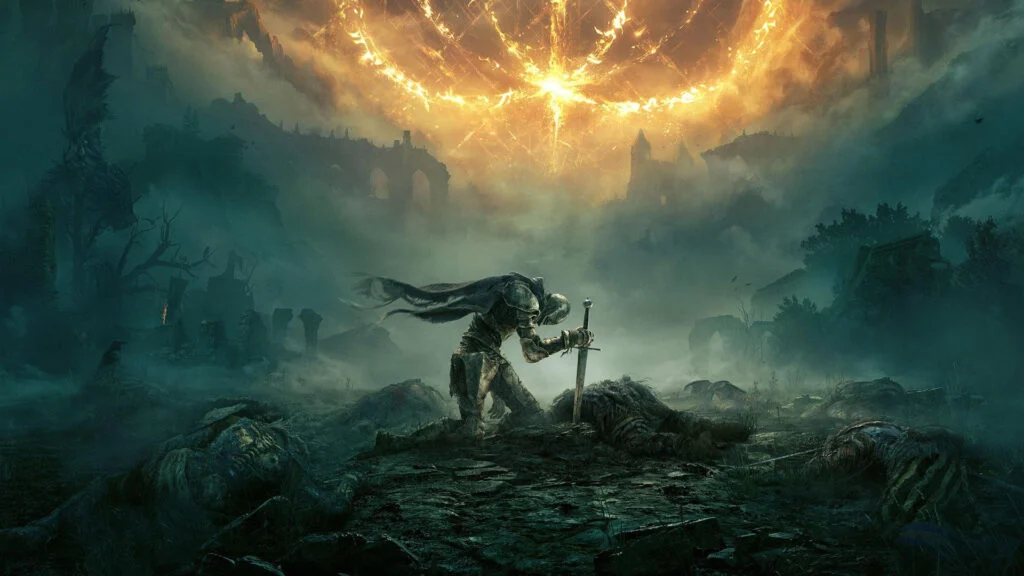
The vast, haunting landscapes of FromSoftware’s Elden Ring wouldn’t carry half their emotional weight without the masterful soundtrack composed by Yuka Kitamura, Tsukasa Saitoh, Shoi Miyazawa, and others. Released in February 2022, this open-world action RPG created by Hidetaka Miyazaki in collaboration with fantasy novelist George R.R. Martin features a soundtrack that does far more than simply accompany gameplay—it transforms the experience into something transcendent.
As players journey through the Lands Between, they are enveloped by a musical tapestry that shifts between solemn ambience, heart-pounding battle themes, and moments of surprising beauty. The soundtrack elevates Elden Ring beyond a mere game, transforming it into a deeply affecting emotional experience that lingers long after players set down their controllers.

The Composers Behind The Shattered Ring
While FromSoftware has become synonymous with challenging gameplay and atmospheric worldbuilding, the studio’s musical choices have become equally distinctive. The Elden Ring soundtrack continues the tradition established in their previous titles like Dark Souls and Bloodborne, but with a scale befitting its expansive world.
Leading the musical direction was veteran FromSoftware composer Yuka Kitamura, whose contributions to previous FromSoftware titles had already earned her significant acclaim. Alongside Kitamura stood Tsukasa Saitoh, Shoi Miyazawa, Tai Tomisawa, and Yoshimi Kudo—each bringing their unique sensibilities to the project while maintaining a cohesive sound.
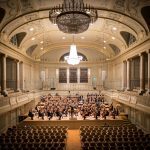
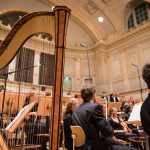
The soundtrack was recorded by the Budapest Film Orchestra, whose performances add a crucial human element to the compositions. When discussing the recording process, Kitamura has noted that the orchestral performances were crucial for capturing the right emotional tone for Elden Ring‘s world: “We wanted the music to convey both majesty and decay—something that felt ancient yet powerful.”
Musical Themes and Motifs
Like the interconnected world of the Lands Between itself, Elden Ring‘s soundtrack is built around recurring musical ideas that evolve and transform throughout the experience. This approach to composition does more than simply provide aesthetic pleasure—it reinforces the game’s narrative throughlines and thematic concerns.
The Broken Ring Motif
The central musical theme of Elden Ring—first heard in the main menu and echoed throughout various pieces—centers around a distinctive five-note motif that musicologists have dubbed “The Broken Ring.” This simple yet versatile melody appears in various guises throughout the soundtrack, sometimes performed as a sorrowful string passage, other times transformed into a thunderous brass proclamation during critical boss encounters.
Music theorist Alex Wiltshire notes that this motif typically appears in a minor key and uses an unconventional interval structure that creates a sense of “beautiful instability,” mirroring the fractured nature of the game’s world and narrative.
Regional Musical Identity
Each major region of the Lands Between possesses its own distinct musical character, carefully crafted to enhance the environmental storytelling. From the somber strings that accompany players through Limgrave to the unsettling choral arrangements that define Caelid’s blighted landscape, the soundtrack establishes a strong sense of place.
Particularly noteworthy is the approach to Leyndell, Royal Capital, where the music incorporates regal brass and formal compositional structures that evoke the area’s imperial history. By contrast, the underground regions feature sparse, echoing arrangements with unconventional instrumentation that emphasizes their alien nature.

Main Theme – “Elden Ring”
In the game: The main theme plays during the opening cinematic and on the main menu, immediately establishing the game’s epic yet melancholic tone. The piece begins with sparse, haunting choral elements before building to a full orchestral arrangement that introduces the game’s central musical motif. This composition acts as the player’s first musical introduction to the Lands Between, setting expectations for the journey ahead.
Trivia: Composer Yuka Kitamura has stated that this theme underwent more revisions than any other piece in the soundtrack, with over twelve different versions composed before settling on the final arrangement. The distinctive five-note motif that forms the core of the piece was present from the earliest drafts, but the orchestration evolved significantly. The final version features a 60-piece orchestra and 32-person choir recorded at AIR Studios in London.
“Limgrave”
In the game: This ambient piece accompanies players through their first extensive exploration of the Lands Between. Its gentle, wistful string arrangements and occasional wind instruments create a sense of melancholic beauty that perfectly complements the rolling landscapes and ruins of Limgrave. The music subtly intensifies when approaching points of interest or danger, serving as an unobtrusive guide.
Trivia: The string section for “Limgrave” was recorded using a technique called “feathering,” where string players alternate their bow strokes rather than playing in unison, creating a more diffuse, atmospheric sound. Field recordings from the Scottish Highlands were subtly incorporated into the background texture of the track, adding natural environmental elements to the orchestral arrangement.
“Tree Sentinel”
In the game: This track plays during encounters with the imposing Tree Sentinels, often among the first major challenges players face. The composition features martial brass and driving percussion that emphasize the mounted knight’s formidable presence and the significance of overcoming this early test.
Trivia: Composer Tsukasa Saitoh took inspiration from medieval European martial music for this piece, studying historical battle compositions to create authentic-feeling fanfares. The percussion section includes instruments rarely found in orchestral arrangements, including a massive taiko drum that required special microphone placement during recording sessions.
“Godrick, the Grafted”
In the game: As the first major “shardbearer” boss many players encounter, Godrick’s theme accompanies a pivotal early challenge. The music begins with ominous strings and brass that establish Godrick’s fallen nobility before transitioning to more frantic arrangements in the second phase that mirror his increasing desperation and the revelation of his grafted dragon arm.
Trivia: The choir in this piece performs text in Latin that loosely translates to “fallen giant, grasping at greatness,” a reference to Godrick’s character as a lesser descendant of Godfrey attempting to reclaim glory through grafting. The second phase of the music incorporates distorted wind instruments processed through guitar amplifiers to create the “roaring” quality that accompanies Godrick’s dragon arm reveal.
“Rennala, Queen of the Full Moon”
In the game: This haunting composition accompanies the battle with Rennala in the Academy of Raya Lucaria. The first phase features ethereal, music-box-like elements that reflect the eerie singing of Rennala’s students, while the second phase introduces a full choir and orchestral arrangement that signifies her return to her full power under the moonlight.
Trivia: The distinctive “lullaby” quality of the first phase was created using a genuine antique music box recorded at various speeds, then layered with processed female vocals. Composer Shoi Miyazawa has noted that this piece went through significant conceptual changes, as early versions were more explicitly “magical” in quality before being revised to emphasize the character’s melancholy and lost grandeur.
“Starscourge Radahn”
In the game: This powerful composition accompanies the festival battle against General Radahn. Its tribal drums and chanting evoke the warrior culture of Radahn’s forces, while the sweeping strings in later phases highlight the tragic grandeur of the fallen hero. The music’s scale matches the epic nature of the battle, which involves multiple NPC summons and takes place across a vast battlefield.
Trivia: The percussion for this track includes actual cavalry drums from the 19th century, sourced from a military museum and carefully recorded to capture their distinctive resonance. The male choir sections were recorded with the singers positioned unusually far from each other in the recording space to create a sense of a battlefield chant echoing across a wide area.
“Mohg, Lord of Blood”
In the game: This unsettling composition accompanies the battle with Mohg, featuring ritualistic chanting and dissonant string arrangements that reflect the character’s association with eldritch blood ceremonies. The music becomes increasingly chaotic during the battle’s second phase, when Mohg begins his occult communion with the Formless Mother.
Trivia: The choral sections of this piece are performed in a constructed language created specifically for Mohg’s character, with phonetic patterns designed to evoke ancient ritual speech. Some of the string effects were created by preparing violins with metal objects placed between the strings, a technique inspired by avant-garde composer John Cage’s “prepared piano” approach.
FromSoftware’s Musical Evolution
The soundtrack also represents the culmination of FromSoftware’s evolving musical approach across multiple games. While early titles in the Souls series featured impressive but more conventionally structured compositions, each subsequent release has shown increased willingness to experiment with form, instrumentation, and the integration of environmental sound design.
Music critic Kirk Hamilton has observed that Elden Ring represents the studio’s most sophisticated use of music to date: “You can hear elements that recall Bloodborne‘s Gothic horror or Sekiro’s Japanese influences, but they’ve been synthesized into something entirely new and appropriate for this specific world.”
Recording the Unrecordable: Technical Achievements
Beyond the compositional achievements, the technical aspects of Elden Ring‘s soundtrack represent significant innovations in how game music is produced and implemented.
Adaptive Composition
Unlike linear media like films, games must respond to unpredictable player actions. Elden Ring employs sophisticated adaptive music systems that allow its soundtrack to seamlessly transition between different emotional states based on player behavior.
Audio programmer Keiichi Okabe explains: “For open-world exploration, we needed music that could sustain interest during long play sessions while still responding to events. We developed systems that subtly alter the orchestration and intensity based on factors like proximity to enemies, time of day, and area danger level.”
This is particularly evident in how exploration themes transition into combat arrangements when enemies are engaged, with the music retaining core melodic elements while introducing more urgent rhythmic components and additional instrumentation.
Unconventional Recording Techniques
To achieve some of the soundtrack’s more unusual sounds, the audio team employed experimental recording techniques. Certain ambient tracks incorporate manipulated field recordings from natural environments, while some of the more otherworldly sounds for areas like the underground regions were created using techniques like recording conventional instruments played in unconventional ways.
For the choral arrangements that feature prominently in tracks like “Elden Beast,” the team recorded vocal performances in a reverberant cathedral space, then further processed these recordings to create the ethereal, almost supernatural quality that defines these pieces.
This post was brought to you in collaboration with our partner site Behind the Score. Discover the Harmony Secrets of Modern Film and Video Games.
Master the art of film music composition with everything you need to know about creating impactful scores. Complete Collection Study Pack (Enter 25FMT at the checkout for instant 25% off)