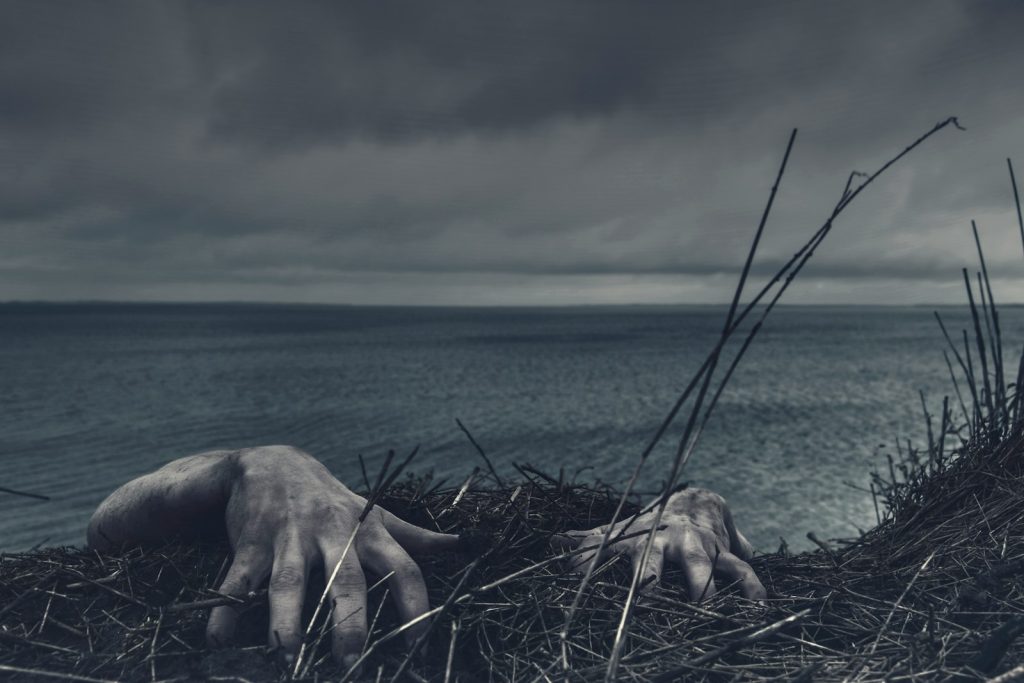

Cover Photo by 
This post was brought to you in collaboration with our partner site Behind the Score. Discover the Harmony Secrets of Modern Film and Video Games.
Master the art of film music composition with everything you need to know about creating impactful scores. Complete Collection Study Pack is currently on sale for 67% off:

Horror films are about more than just what you see on screen—they’re an experience that crawls under your skin, and a big part of that comes from the music. Whether it’s the eerie hum of a theremin, the screech of violins, or the unsettling pulse of a synthesizer, horror soundtracks have evolved alongside the genre itself, amplifying every shiver and scream. Today, we dig deep into the history of horror film music, tracing its evolution through time. From the groundbreaking work of John Carpenter to the dissonant masterpieces of Krzysztof Penderecki, we’ll uncover how composers have created some of the most haunting and iconic scores in cinematic history.
Explore Our Top Picks: Recommended Books for Film Composers (2025 Update)
The Foundations: Early Horror Music and the Silent Film Era
Before synchronized soundtracks became commonplace, live orchestras or organists often accompanied silent films. These performances relied on pre-existing classical pieces or improvisation to evoke fear and tension. For instance:
- “Nosferatu” (1922): Hans Erdmann’s score for Nosferatu blended dark Romanticism with sharp, jarring notes to accentuate the vampire’s menace. Modern rescored versions often use eerie strings and dissonant harmonies to mimic the original intent.
- “The Cabinet of Dr. Caligari” (1920): While the score was lost, modern adaptations often emphasize its surreal visuals with equally haunting music, reflecting the early use of sound to heighten the mood.
These early scores laid the groundwork for horror music, demonstrating its power to manipulate audience emotions.
The Advent of the Theremin: Creating Unearthly Sounds
The theremin, an early electronic instrument, became synonymous with sci-fi and horror in the mid-20th century. Its otherworldly, wailing sound introduced a new way to represent the supernatural and the unknown.
- “Spellbound” (1945): Miklós Rózsa used the theremin to evoke psychological unease, influencing its later use in horror films.
- “The Day the Earth Stood Still” (1951): Although more sci-fi than horror, Bernard Herrmann’s use of the theremin shaped how filmmakers thought about creating tension through unconventional means.
The theremin’s eerie tones foreshadowed the experimental approaches that would dominate later horror scores.
The Golden Age of Horror: Symphonic Dread
As horror films became mainstream in the 1930s and 1940s, symphonic scores took center stage, borrowing heavily from Romantic-era classical music.
- “Dracula” (1931): While largely silent, its opening credits used Tchaikovsky’s Swan Lake, hinting at the use of orchestral music to set an unsettling tone.
- “Frankenstein” (1931): Bernard Kaun’s sparse use of sound underscored the monster’s tragic and terrifying nature.
These films demonstrated the potential of orchestral music to both terrify and humanize, a theme that persisted in horror scoring for decades.
The 1960s: Experimentation and Psychological Horror
The 1960s ushered in a new wave of psychological horror, and composers began to push boundaries with unconventional instrumentation and atonality.
- “Psycho” (1960): Bernard Herrmann’s string-only score revolutionized horror music. The screeching violins during the infamous shower scene became an iconic representation of terror, influencing countless future scores.
- “Carnival of Souls” (1962): Gene Moore’s organ-based soundtrack added an eerie, gothic quality, amplifying the film’s dreamlike unease.
These examples marked a shift toward music as a psychological tool, reflecting inner turmoil and dread rather than just external threats.
The Avant-Garde Influence: Penderecki and “The Exorcist”
The 1970s saw horror music embrace avant-garde techniques, particularly the use of dissonance and chaos to unsettle audiences. Krzysztof Penderecki’s compositions, featured prominently in The Exorcist (1973), epitomize this trend.
- Krzysztof Penderecki’s “Polymorphia” and “Threnody for the Victims of Hiroshima”: Both pieces, used in The Exorcist, employ clusters of notes and unconventional techniques, creating an overwhelming sense of dread.
- “Tubular Bells” by Mike Oldfield: While not avant-garde, this minimalistic theme became synonymous with The Exorcist, showcasing how repetition and simplicity could evoke terror.
Penderecki’s work demonstrated how horror scores could delve into the abstract, leaving audiences with an unshakable sense of unease.

The Synth Revolution: Carpenter and Minimalism
The late 1970s and 1980s marked a shift toward synthesizers, largely driven by technological advancements and budget constraints. John Carpenter’s Halloween (1978) exemplifies this era.
- “Halloween” (1978): Carpenter’s use of a simple, repetitive piano motif over synthesizers redefined horror scoring. The minimalism and cold, mechanical sound mirrored the relentless nature of Michael Myers.
- “A Nightmare on Elm Street” (1984): Charles Bernstein blended eerie synth tones with traditional orchestration, bridging two eras of horror music.
Synth-based scores became a hallmark of the genre, their unsettling artificiality perfectly suited for the decade’s fascination with the uncanny.
The 1990s: A Return to Orchestral Grandeur
As horror moved into the blockbuster era, composers returned to orchestral scores while incorporating modern techniques.
- “Scream” (1996): Marco Beltrami’s score revived the use of traditional orchestration while blending it with sharp, unexpected shifts in tone to match the film’s self-aware narrative.
- “The Sixth Sense” (1999): James Newton Howard’s emotionally driven score balanced tenderness with moments of haunting suspense, emphasizing the film’s themes of loss and fear.
The 1990s showcased a blend of old and new, reflecting a genre in transition.
The 21st Century: Innovation and Cultural Identity
Modern horror scores continue to innovate, incorporating diverse influences and soundscapes.
- “Get Out” (2017): Michael Abels’ score blends traditional horror elements with African musical motifs, creating a uniquely unsettling atmosphere. Tracks like “Sikiliza Kwa Wahenga” use Swahili chants to evoke ancestral warnings, adding layers of cultural depth.
- “Hereditary” (2018): Colin Stetson’s use of distorted brass and experimental textures creates an oppressive soundscape, mirroring the film’s psychological torment.
- “It Follows” (2014): Disasterpeace’s synth-heavy score channels 1980s horror while feeling fresh and modern.
These examples highlight how contemporary composers draw from the past while forging new paths.
The Future of Horror Music
As technology continues to advance, horror music will undoubtedly evolve further. AI-generated music, interactive scores in virtual reality experiences, and even the resurgence of analog instruments may define the next era of horror. One thing is certain: whether through a haunting theremin, a dissonant symphony, or an eerie synth, horror music will continue to terrify and captivate audiences, proving its timeless ability to explore the darkest corners of human emotion.
What are your favorite horror scores, and how do they unsettle you?
This post was brought to you in collaboration with our partner site Behind the Score. Discover the Harmony Secrets of Modern Film and Video Games.
Master the art of film music composition with everything you need to know about creating impactful scores. Complete Collection Study Pack is currently on sale for 67% off: