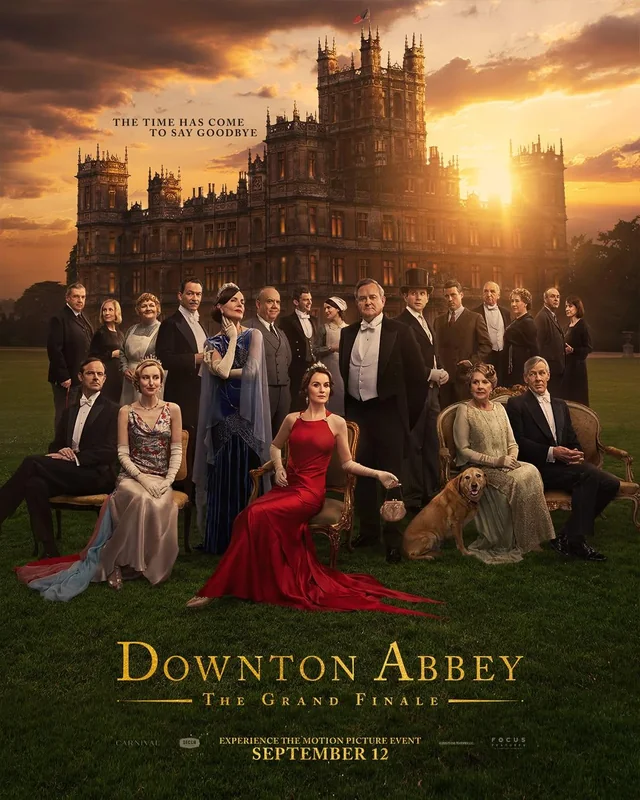

As the curtains draw on one of television’s most beloved sagas, Downton Abbey: The Grand Finale delivers a poignant farewell to the Crawley family and their sprawling Yorkshire estate. Directed by Simon Curtis and penned by series creator Julian Fellowes, this 2025 film caps a franchise that has captivated audiences for over a decade with its blend of upstairs glamour and downstairs grit. But beyond the glittering gowns and whispered scandals, it’s the music that truly lingers—a sweeping orchestral tapestry composed by John Lunn, the Scottish maestro whose themes have become synonymous with the series’ emotional heartbeat.
Lunn’s score for The Grand Finale, released on Decca Records, clocks in at 21 tracks and runs just over 40 minutes, a concise yet evocative sendoff. Drawing on the melancholy strings and pastoral woodwinds that defined the original TV run, Lunn infuses this soundtrack with a sense of inevitable change. Set against the backdrop of 1930 England, where the shadow of economic turmoil looms large, the music underscores themes of legacy, loss, and quiet resilience. It’s no wonder critics have hailed it as “consequential music,” as Classic FM put it—not mere background filler, but a narrative force that elevates every tearful glance and triumphant toast.
Lunn, an Emmy winner for his work on the series, has long mastered the art of emotional subtlety. His Downton scores avoid bombast, opting instead for intimate motifs that mirror the characters’ inner worlds. In this finale, he revisits familiar leitmotifs—the lilting main theme for the estate itself, tender violin lines for romantic entanglements—while weaving in fresh elements like jazzy undertones for London scenes and choral swells for communal gatherings. Collaborations with Noël Coward tunes add a layer of period authenticity, performed by artists like Marilyn Cutts and Arty Froushan. The result is a score that feels like a warm embrace, bidding adieu to Highclere Castle’s hallowed halls.
What makes Lunn’s work shine in The Grand Finale is its seamless integration with the story’s dual threads: the family’s financial woes and social reintegration. As Mary Crawley Talbot navigates divorce and estate management, the music swells to reflect her isolation and eventual empowerment. Meanwhile, lighter cues accompany the arrival of old friends like Guy Dexter and Noël Coward, injecting levity into the proceedings. Reviews from Screen Daily praise how Lunn’s “familiar music swirls and swoons across green fields and society gatherings,” capturing the film’s nostalgic pull without descending into sentimentality.
A Night in Piccadilly / I’ll See You Again
In the film: This opening medley sets the glittering tone as the Crawleys—minus a beleaguered Mary—arrive in 1930 London for a performance of Bitter Sweet. The Noël Coward standard “I’ll See You Again” plays over backstage revelry, where they reunite with Guy Dexter and Thomas Barrow, now thriving as Dexter’s partner. As confetti falls and champagne flows, Lunn’s orchestration swells with harp and clarinet, bridging the lively theater crowd to the intimate joy of reconnection, foreshadowing the film’s theme of enduring bonds amid change.
Trivia: Blending Lunn’s original cue with Coward’s 1929 hit—famously covered by Noël Coward himself—this track marks a meta-nod to the era’s revue culture. Lunn arranged it with Marilyn Cutts on vocals, drawing from archival recordings to evoke the smoky cabaret vibe. At 3:41, it’s the album’s longest opener, symbolizing the franchise’s expansive legacy.
The London Season
In the film: Amid the whirl of Lady Petersfield’s ball, this brisk cue underscores the shattering revelation of Mary’s divorce. As whispers ripple through the crowd and she’s unceremoniously ushered out, staccato strings and muted brass mimic the scandal’s sharp edges, contrasting the waltz rhythms of the dance floor. It heightens the humiliation, with a sudden hush as royals arrive, leaving Mary isolated in the shadows.
Trivia: Clocking in at under a minute, this is Lunn’s nod to the social whirl of the London Season, the debutante circuit that defined upper-class summers. He incorporates period-appropriate fox-trot elements, inspired by 1930s dance bands like Jack Hylton‘s orchestra, to capture fleeting glamour turning sour.
Mary, Alone Again
In the film: Back at Grantham House, Mary grapples with solitude after her liaison with Gus Sambrook. As dawn breaks and regret settles, solo violin and piano weave a lament, underscoring her reflection on failed dreams—flashing back to Henry Talbot’s absence. The music fades as Harold Levinson arrives, shifting from melancholy to tentative resolve, mirroring her pivot from personal turmoil to familial duty.
Trivia: This intimate piece reworks Lunn’s “Mary theme” from the series, first heard in Season 1’s courtship arcs. Recorded with a single violinist for raw vulnerability, it’s a fan favorite for its emotional directness, evoking composers like Ralph Vaughan Williams in its folk-inflected sorrow.
Home at Last
In the film: The party’s train journey to Downton Abbey culminates in this warm homecoming cue. As the estate looms on the horizon, swelling horns and pastoral flutes accompany the family’s arrival, with servants lining the drive. It punctuates Harold’s boisterous entrance and Cora’s weary smile, blending relief with the undercurrent of impending financial strife.
Trivia: Lunn drew from English pastoral traditions, echoing Gustav Holst‘s A Somerset Rhapsody for the woodwind flourishes. At 1:31, it’s a microcosm of the score’s optimism, featuring the Chamber Orchestra’s signature lush strings that have defined Downton’s “homecoming” motifs since 2010.
Goodbye and Welcome
In the film: During the tense dinner where Harold proposes risky investments, this transitional cue plays as Robert storms out, clashing with Mary’s pragmatic defense of the estate. Brief woodwind trills signal shifting alliances, welcoming Tom’s arrival with Sibbie while bidding farewell to old certainties, heightening the rift’s emotional stakes.
Trivia: True to its title, the track layers “farewell” descending chromatics with “welcome” ascending arpeggios, a technique Lunn honed in the series’ finale episodes. It’s one of three sub-minute cues, showcasing his economy in scoring dialogue-heavy scenes.
A Happy Return
In the film: Tom’s warning about Sambrook’s fraud at Royal Ascot triggers this buoyant yet urgent motif. As Edith confronts the schemer and Mary dismisses him with icy poise, lively brass and percussion evoke the races’ energy, turning potential disaster into a cathartic victory, with the crowd’s cheers amplifying the family’s unity.
Trivia: Inspired by Ascot’s real 1930 Gold Cup, Lunn incorporated equestrian rhythms from hunt ball music. Featuring guest percussionist Evelyn Glennie‘s influence, it’s a rare upbeat track, balancing the score’s predominant melancholy.
The County Show
In the film: At the annual fair organized by Isobel Merton, this folksy reel accompanies the chaos of clashing traditions—Sir Hector’s stuffiness versus Daisy’s modern touches. As Mr. Mason wins the top prize, fiddles and accordions swell, celebrating community spirit and Mrs. Patmore’s retirement toast.
Trivia: Lunn channeled Cecil Sharp‘s folk collections for authentic English country dance vibes. The track’s 1:09 runtime matches the scene’s brevity, but its infectious energy has sparked TikTok covers among fans.
Prodigal Daughter
In the film: Mary’s “restoration” unfolds during the star-studded dinner with Dexter and Coward. As rumors of her resilience spread via servants’ gossip, tender strings build to a choral lift, culminating in Coward’s impromptu song, symbolizing her prodigal return to societal grace.
Trivia: A variation on the “prodigal son” biblical motif, this cue integrates choral elements from Lunn’s Belgravia score. Vocals by The Sixteen add ethereal depth, making it a standout for live concert adaptations.
The Crown is Passed
In the film: The emotional apex arrives as Robert and Cora prepare to vacate the main house for the Dower house. Mary’s flashbacks to lost loved ones—Matthew, Sybil, Violet—play over this elegiac suite, with the main theme’s full orchestral rendition sealing her inheritance of Downton’s “crown.”
Trivia: At 4:20, it’s the score’s emotional core, reprising themes from all six seasons. Lunn dedicated it to Maggie Smith, whose Violet shaped the series, incorporating a subtle harp tribute to her character’s wit.
End Titles
In the film: Rolling over the mid-credits montage of paired couples—Mary with her children, Edith with Bertie—these titles reprise the main theme in grand, bittersweet fashion. As the screen fades on Downton’s sunlit facade, it leaves audiences with a lump in the throat, echoing the estate’s enduring spirit.
Trivia: Lunn’s finale cue clocks in at 3:49, bookending the album with closure. Featuring a new arrangement for full orchestra and choir, it’s already charting on classical playlists, with Apple Music streams surpassing previous installments.
As the Crawleys step into an uncertain 1930s, his music reminds us that while eras end, their melodies persist. Whether you’re a longtime devotee or a newcomer drawn by the hype, this soundtrack is more than souvenir; it’s a symphony of what was lost and what endures. Pour a cuppa, dim the lights, and let Lunn transport you one final time to those grand, gossipy halls.