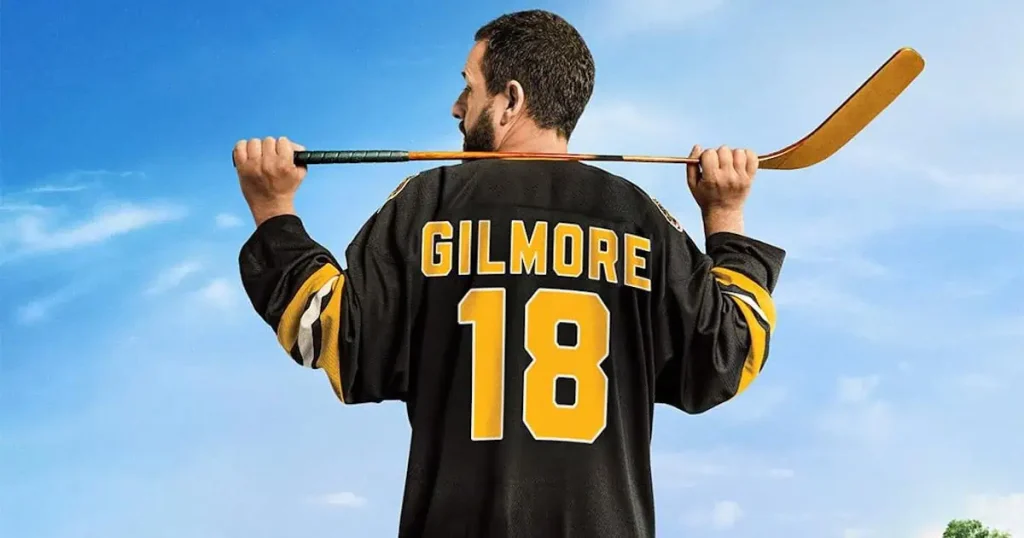

Nearly three decades after the original “Happy Gilmore” charmed audiences with its unconventional golf comedy and memorable musical moments, Adam Sandler returns to the fairway in “Happy Gilmore 2.” The highly anticipated Netflix sequel, released on July 25, 2025, brings back the beloved hockey-player-turned-golfer character alongside an expertly curated soundtrack that blends classic rock anthems, hip-hop bangers, and an original score that perfectly captures the film’s energetic spirit.
Directed by Kyle Newachek, the sequel picks up almost three decades after the original, as Happy Gilmore comes out of golf retirement to help fund his daughter’s dream of going to a prestigious ballet school. The musical landscape of this comeback story is as dynamic and unpredictable as Happy’s unconventional golf swing, featuring a wealth of needle drops, ranging from Foreigner, House Of Pain, to Muse’s ‘Knights Of Cydonia’.
The Musical Maestro Behind the Score
The film’s score is by Rupert Gregson-Williams, whose previous credits include Hacksaw Ridge, Wonder Woman, Aquaman and The Holiday. This accomplished composer brings his signature blend of orchestral sophistication and contemporary edge to the Happy Gilmore universe. He’s previously collaborated with Sandler on Grown Ups, Just Go With It, Jack and Jill, and many others, making him an ideal choice to understand the comedic timing and emotional beats that define Sandler’s filmmaking style.
Rupert Gregson-Williams has established himself as one of Hollywood’s most versatile composers, capable of shifting seamlessly between superhero epics and intimate comedies. His work on “Happy Gilmore 2” demonstrates his ability to create music that enhances both the laugh-out-loud moments and the heartfelt family dynamics that drive the narrative forward.
Rock Anthems and Athletic Motivation
The soundtrack’s emphasis on rock music serves multiple narrative purposes beyond simple entertainment value. Happy Gilmore 2 includes an incredible soundtrack mostly comprised of rock music, which is perfect for Adam Sandler’s character’s golf comeback. The selection of high-energy rock tracks mirrors Happy’s aggressive, unconventional approach to golf while providing the motivational backdrop for his return to professional sports.
The musical choices reflect the character’s blue-collar hockey background and his refusal to conform to golf’s traditionally refined image. Each rock anthem serves as an audio representation of Happy’s rebellious spirit, creating a sonic landscape that’s distinctly different from the classical or jazz compositions typically associated with golf films.
A Nostalgic Journey Through Musical Decades
The soundtrack spans multiple decades of popular music, creating a nostalgic journey that appeals to both longtime fans of the original film and new audiences discovering Happy’s story for the first time. This multi-generational approach to song selection reflects the film’s 29-year gap between installments, acknowledging how both the character and his audience have evolved while maintaining the essential spirit that made the original so memorable.
The inclusion of both classic rock staples and more contemporary tracks creates a musical bridge between the 1996 original and the 2025 sequel, suggesting that Happy’s story remains relevant across different musical eras and cultural moments.
Musical Examples from Happy Gilmore 2
Jump Around (House of Pain)
In the film: “Jump Around” by House of Pain appears during one of the film’s high-energy sequences, likely accompanying Happy’s preparation for a crucial golf match or a moment of triumph on the course. The track’s infectious energy and crowd-pleasing nature make it perfect for scenes requiring maximum audience engagement.
Trivia: Released in 1992, “Jump Around” became one of the most recognizable pump-up songs in sports and entertainment. The track’s association with athletic achievement and crowd excitement makes it an ideal choice for a comeback story about an aging athlete returning to competition.
Knights of Cydonia (Muse)
In the film: Muse’s “Knights of Cydonia” provides an epic, almost cinematic backdrop for what is likely one of the film’s most dramatic golf sequences. The song’s progressive rock structure and soaring vocals create a sense of mythic adventure around Happy’s golf exploits.
Trivia: Muse’s 2006 epic combines elements of prog rock, western themes, and operatic vocals. The track’s video game-like energy and fantasy elements align perfectly with the larger-than-life nature of Happy’s golf adventures, treating each golf shot like a heroic quest.
Eye of the Tiger (Survivor)
In the film: The quintessential training montage anthem appears during Happy’s preparation sequences, providing the motivational backbone for his return to professional golf. The track’s association with athletic comebacks makes it an obvious but effective choice for the film’s central narrative arc.
Trivia: Survivor’s 1982 hit became synonymous with athletic determination after its use in “Rocky III.” Its inclusion in “Happy Gilmore 2” creates an immediate connection to the underdog sports movie tradition while maintaining the film’s comedic sensibility.
Carry On Wayward Son (Kansas)
In the film: Kansas’s “Carry On Wayward Son” likely underscores a reflective moment in Happy’s journey, possibly during a scene where he contemplates his past mistakes and future responsibilities as a father. The song’s themes of redemption and perseverance align with the character’s emotional arc.
Trivia: Released in 1976, this Kansas classic combines progressive rock complexity with accessible melodies. Its lyrics about finding peace after a period of struggle perfectly mirror Happy’s journey from retired has-been to determined father fighting for his daughter’s dreams.
Get Low (Lil Jon & The East Side Boyz feat. Ying Yang Twins)
In the film: This hip-hop party anthem provides a stark contrast to golf’s traditional atmosphere, likely accompanying scenes where Happy brings his street credibility to the country club environment. The track serves as an audio representation of cultural clash and comedic tension.
Trivia: Lil Jon’s 2003 crunk anthem became a party staple and symbol of early 2000s hip-hop culture. Its inclusion demonstrates the film’s commitment to musical diversity while highlighting Happy’s outsider status in the golf world.
Juke Box Hero (Foreigner)
In the film: Foreigner’s “Juke Box Hero” appears during a scene that celebrates Happy’s rise to fame or his return to the spotlight. The track’s narrative about an ordinary person becoming a rock star parallels Happy’s transformation from unknown to golf celebrity.
Trivia: Foreigner’s 1981 hit tells the story of someone who achieves stardom through dedication and natural talent. This narrative perfectly mirrors Happy’s unconventional path to golf success, making it an ideal musical companion for his story.
Tuesday’s Gone (Lynyrd Skynyrd)
In the film: Lynyrd Skynyrd’s “Tuesday’s Gone” provides a more contemplative musical moment, likely during a scene dealing with loss, reflection, or Happy’s relationship with his late wife. The song’s melancholic beauty creates space for emotional depth within the comedy.
Trivia: From Lynyrd Skynyrd’s 1973 debut album, this track showcases the band’s ability to blend hard rock with introspective lyrics. Its themes of departure and moving forward resonate with Happy’s journey from widowhood to new purpose.
She Sells Sanctuary (The Cult)
In the film: The Cult’s “She Sells Sanctuary” adds alternative rock energy to the soundtrack, possibly accompanying scenes of Happy’s training or his interactions with other golfers. The track’s driving rhythm and mysterious lyrics create an atmosphere of determination and rebellion.
Trivia: The Cult’s 1985 hit combines post-punk energy with classic rock sensibility. Its inclusion demonstrates the soundtrack’s range and ability to draw from different rock subgenres to create a comprehensive musical experience.
The Waiting (Tom Petty & The Heartbreakers)
In the film: Tom Petty’s “The Waiting” likely accompanies moments of suspense or anticipation in Happy’s golf career, possibly during crucial putts or while waiting for tournament results. The song’s themes of patience and perseverance align with the mental aspects of golf.
Trivia: Tom Petty’s 1981 track explores themes of patience and endurance in the face of uncertainty. Its inclusion adds a layer of Americana authenticity to the soundtrack while providing commentary on the mental game required for golf success.
Magic (Pilot)
In the film: Pilot’s “Magic” brings a touch of 1970s pop sophistication to the soundtrack, likely during a moment of triumph or revelation. The track’s upbeat nature and celebratory lyrics make it perfect for scenes of achievement or breakthrough.
Trivia: Pilot’s 1974 hit became a classic example of sophisticated pop craftsmanship. Its inclusion demonstrates the soundtrack’s commitment to musical quality and its ability to find the perfect song for each emotional beat in the story.
The Netflix Release Strategy and Musical Impact
The film’s release on Netflix on July 25, 2025, represents a significant shift in how major comedy sequels reach their audiences. The streaming platform’s global reach means that the soundtrack’s diverse musical selections can find audiences worldwide, potentially introducing classic rock and hip-hop tracks to new generations of listeners while satisfying nostalgic fans of the original film.
The complete soundtrack features 25 songs, creating a comprehensive musical experience that extends well beyond the film’s runtime. This extensive track listing reflects the modern approach to soundtrack releases, where streaming platforms allow for more complete presentations of a film’s musical content.
The soundtrack’s success lies in its ability to balance familiar crowd-pleasers with more sophisticated musical choices, creating an experience that works both as background for the film’s action and as standalone listening. This dual functionality has become increasingly important in the streaming era, where soundtracks often enjoy separate commercial lives through Spotify playlists and YouTube compilations.
The inclusion of contemporary artists alongside classic rock staples demonstrates the film’s awareness of its multi-generational audience while maintaining the irreverent spirit that made the original such a cultural phenomenon. By combining Bad Bunny’s modern appeal with established rock anthems, the soundtrack creates a musical bridge between different audience demographics.
Future Impact and Musical Innovation
“Happy Gilmore 2” represents more than just a nostalgic return to a beloved character; it demonstrates how modern sequel-making can honor original source material while embracing contemporary musical sensibilities. The soundtrack’s success may influence future comedy sequels to take similar approaches, balancing familiar elements with fresh musical perspectives.
The film’s musical choices also reflect broader trends in how streaming content approaches soundtrack curation, with platforms increasingly recognizing music as a crucial element in creating binge-worthy content that generates social media engagement and cultural conversation.
As audiences continue to discover and rediscover the film through Netflix’s recommendation algorithms, the soundtrack serves as an additional entry point for engagement, potentially introducing viewers to both classic and contemporary artists while reinforcing the film’s themes of determination, family loyalty, and the power of unconventional approaches to traditional challenges.
The “Happy Gilmore 2” soundtrack ultimately achieves what the best comedy soundtracks accomplish: it enhances every aspect of the viewing experience while standing as an entertaining musical journey in its own right. Through careful curation and expert production, the film creates a sonic landscape that’s as memorable and effective as Happy’s most outrageous golf shots.