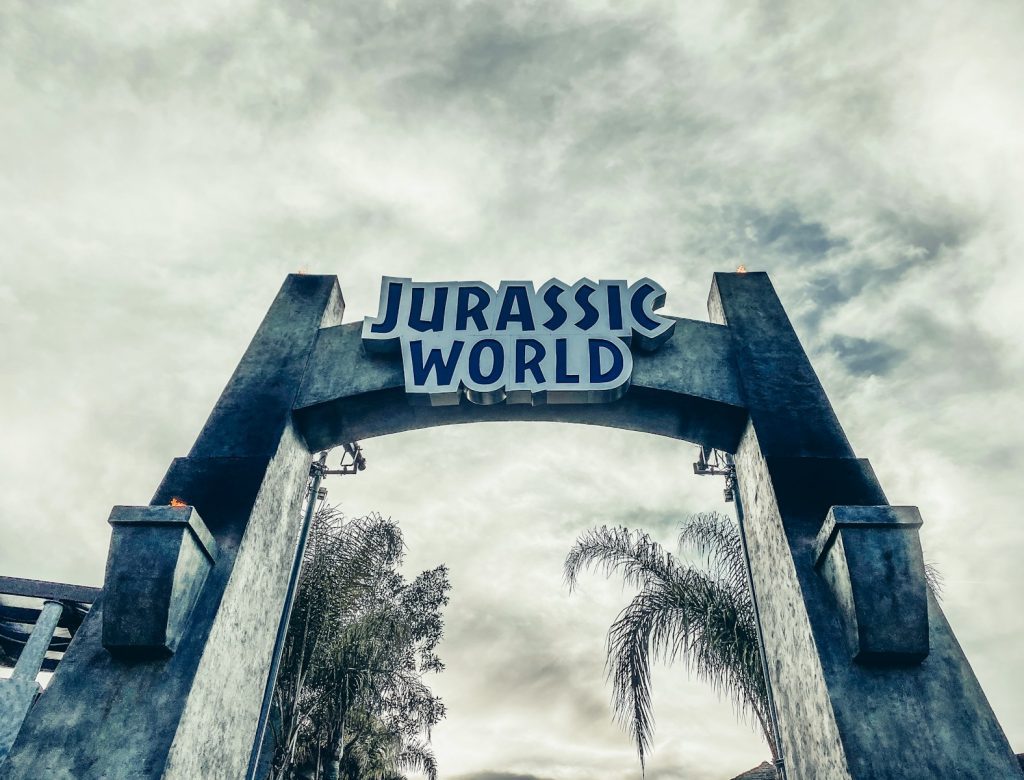

Cover photo by 
The prehistoric world has roared back to life with Jurassic World Rebirth, and with it comes a masterful musical score that both honors the franchise’s legendary musical heritage and charts bold new territory. Composed by the Oscar-winning Alexandre Desplat, the soundtrack serves as a sonic bridge between the wonder-filled melodies of John Williams‘ original Jurassic Park and the contemporary demands of modern blockbuster filmmaking.
Directed by Gareth Edwards and starring Scarlett Johansson, Mahershala Ali, Jonathan Bailey, Rupert Friend, Manuel Garcia-Rulfo, and Ed Skrein, this latest installment in the franchise brings audiences back to a world where dinosaurs and humans coexist in ways both beautiful and terrifying. Recorded at the legendary Abbey Road Studios in London with a 105-piece orchestra and a 60-piece choir, the score represents a monumental achievement in film music composition.
A New Composer Takes the Reins
Alexandre Desplat reunites with director Gareth Edwards after their collaboration on Godzilla, replacing Michael Giacchino who composed the previous Jurassic World installments. This changing of the musical guard brings a fresh perspective to the franchise while maintaining deep reverence for Williams’ iconic themes that have defined the series since 1993.
Desplat, known for his sophisticated orchestrations in films like The Grand Budapest Hotel and The Shape of Water, brings his distinctive European sensibility to the prehistoric landscape. His approach combines the lush romanticism of his previous work with the adventure-driven spirit that the Jurassic franchise demands.
The soundtrack was released by Back Lot Music on July 2, 2025, coinciding with the film’s theatrical release. The complete album features 34 tracks with a total runtime of 1 hour and 42 minutes, offering fans an extensive musical journey through the world of Jurassic World Rebirth.
The Orchestral Canvas
The decision to record at Abbey Road Studios was no accident. The legendary London facility, home to countless iconic recordings, provides the perfect acoustic environment for Desplat’s ambitious orchestral vision. The massive 105-piece orchestra, supplemented by a 60-voice choir, creates a sonic landscape that can shift seamlessly from intimate chamber music moments to thunderous action sequences.
This orchestral approach represents a return to the grand symphonic tradition that Williams established with the original film. Where the recent Jurassic World films relied heavily on electronic elements and modern production techniques, Rebirth embraces a more classical approach that allows for greater emotional nuance and thematic development.
Thematic Architecture
The Rebirth Theme
Desplat introduces his first major new theme in the opening track “Opening Lab,” which reviewers have dubbed the “Rebirth theme”. This motif serves as the musical embodiment of the film’s central concept – the idea of renewal and transformation within the Jurassic universe. Built on ascending melodic lines and rich harmonic progressions, the theme suggests both hope and uncertainty about what this rebirth might bring.
The theme’s construction reflects Desplat’s compositional sophistication. Rather than relying on simple, hummable melodies, he crafts a complex musical idea that can be fragmented, inverted, and developed throughout the score. This provides the composer with extensive material for variation and development across the film’s runtime.
The Human Element
A “much more hopeful new theme” introduced in “Natural History Museum” represents the human characters of the film. This theme provides an emotional anchor for audiences, representing humanity’s relationship with the prehistoric world they’ve inherited. The melody, first heard on gentle strings before moving to noble brass, suggests both vulnerability and determination.
This human theme becomes crucial during the film’s quieter moments, allowing Desplat to explore the emotional landscape of characters who find themselves in extraordinary circumstances. The theme’s development throughout the score mirrors the characters’ journey from uncertainty to resolve.
Williams’ Legacy Honored
The Jurassic Park Theme
Perhaps the most crucial element of any Jurassic film score is how it handles John Williams’ beloved main theme. Desplat doesn’t shy away from “extensive and utterly beautiful performances of the main theme,” particularly in tracks like “Dino Spectacle” and “Sailing Away”. His arrangements demonstrate deep understanding of the theme’s emotional power while adding his own orchestrational flourishes.
The composer’s approach to the Williams material shows remarkable restraint and respect. Rather than overwhelming the score with nostalgic callbacks, he uses the original themes at precisely the right moments to maximum emotional impact. This careful curation ensures that when audiences hear the familiar melody, it carries genuine emotional weight.
The Adventure Theme
Williams’ adventure theme makes a “sudden flourishing burst” appearance in “Natural History Museum,” with orchestration described as “absolutely magnificent”. This theme, which represents the sense of wonder and discovery central to the Jurassic experience, receives particularly loving treatment from Desplat.
The adventure theme’s appearances throughout the score serve as reminders of what draws both characters and audiences into the world of living dinosaurs. Desplat’s arrangements maintain the theme’s sense of childlike wonder while adding subtle harmonic sophistications that reflect the more complex emotional landscape of this new story.
Musical Examples and Analysis
Boat Chase
In the film: Described as “the best of the action bunch,” this track opens with a “thunderously heroic brassy fanfare” before the Mosasaur theme takes center stage with “sheer orchestral anxiety and tension”. The sequence represents one of the film’s major set pieces, where human technology confronts prehistoric power.
Trivia: This track served as the lead single from the soundtrack album, released on June 26, 2025. The composition showcases Desplat’s ability to write effective action music while maintaining thematic coherence. The Mosasaur’s musical theme, introduced in this sequence, provides a specific musical identity for one of the film’s primary antagonists.
Mosasaur Attacks Yacht
In the film: This four-minute cue represents the first major encounter between humans and the massive marine reptile. Beginning with “ominous strings,” the track introduces “Desplat’s own actual motif for the titular dinosaur” – described as “big,” “menacing,” and “properly in your face”. The music drives the sequence’s escalating tension as the prehistoric predator stalks its modern prey.
Trivia: The Mosasaur theme represents Desplat’s most aggressive compositional statement in the score. Built on large intervallic leaps and supported by crashing brass and emphatic percussion, it creates a sonic representation of the creature’s immense power. The theme’s swirling, leaping character musically depicts the creature’s fluid movement through water.
Dino Spectacle
In the film: This track accompanies one of the film’s most awe-inspiring moments, where characters and audiences alike witness the majesty of living dinosaurs. The music features Williams’ iconic Jurassic Park theme “in full,” with Desplat’s orchestral work described as “almost rivaling Williams’ own renditions” in its spectacular quality.
Trivia: The track title deliberately evokes the sense of wonder that has been central to the franchise since its inception. Desplat’s arrangement adds subtle harmonic colors and orchestrational details that enhance the theme’s emotional impact without altering its essential character. The use of the full orchestra and choir creates a cathedral-like acoustic space that emphasizes the spiritual dimension of encountering these ancient creatures.
Crossing The River/T-Rex
In the film: This eight-minute epic centers on the film’s climactic encounter with the Distortus Rex, a genetically modified T-Rex that serves as the film’s primary antagonist. The track opens with “eerie high-pitched strings and woodwinds” before introducing the “imposing two-note motif” that may represent the mutated predator. The extended runtime allows for substantial thematic development and dramatic pacing.
Trivia: The track’s length reflects the complexity of the sequence it accompanies. Desplat uses the extended timeframe to develop multiple themes simultaneously, creating a musical narrative that parallels the visual action. The composer’s handling of the T-Rex material pays homage to Williams’ original T-Rex themes while establishing new musical territory for this genetically altered variant.
Dino Lovers
In the film: This track represents one of the score’s more tender moments, focusing on the relationship between humans and dinosaurs. The music opens with a “wondrous woodwind and string-flavoured take on the motif for the humans” before introducing “a happily upbeat idea for Jonathan Bailey’s character Loomis”.
Trivia: The track contains a unique performance element: Jonathan Bailey, who plays Dr. Loomis in the film, actually performs his character’s clarinet theme himself. This personal touch adds authenticity to the character’s musical representation and demonstrates the production’s attention to detail. The track concludes with what reviewers describe as an “achingly gorgeous rendition of the hybrid Jurassic Park theme.”
Bella And The Beast
In the film: Serving as the score’s climactic statement, this track accompanies the film’s final confrontation. The music begins with “a frantic rendition of the theme for the humans” before building to “a tremendous emotional crescendo” where the danger theme becomes “suddenly heroically front and centre”.
Trivia: The track’s title references the classic fairy tale, suggesting themes of transformation and understanding between species. Desplat’s orchestration reaches its most complex point here, weaving together multiple themes in a tapestry that resolves the score’s various musical conflicts. The transformation of the danger theme from menacing motif to heroic statement represents sophisticated thematic development.
Sailing Away
In the film: The score’s final statement provides emotional closure for both characters and audience. Opening with “beautifully serene piano focus on Williams’ Jurassic Park theme,” the track builds as the “full orchestra grandly” supports the iconic melody.
Trivia: This closing track serves as a musical epilogue, allowing audiences to emotionally process their journey through the film. Desplat’s arrangement of Williams’ theme serves as both tribute and transformation, suggesting that while the Jurassic saga continues, each installment adds new layers to its musical legacy. The progression from solo piano to full orchestra mirrors the film’s journey from intimate character moments to spectacular set pieces.
Technical Achievement
The technical aspects of the Jurassic World Rebirth score deserve particular recognition. Reviewers have praised Desplat’s “genuinely incredible approach to orchestration,” noting how “instruments are all intricately weaved together in seemingly effortless fashion” to create “gorgeous-sounding cues”. This level of orchestrational sophistication reflects both the composer’s skill and the quality of the recording process.
The use of Abbey Road Studios provided acoustic advantages that are clearly audible in the final product. The studio’s legendary acoustics, combined with the large orchestral forces, create a sonic landscape that can accommodate both intimate chamber music textures and massive tutti passages. The recording quality ensures that even the most complex orchestrational details remain clear and impactful.
Critical Reception
Critics have praised Desplat’s “stunning score” for returning audiences to “the iconic franchise in utterly gorgeous style,” with particular acclaim for the composer’s “meticulous approach to orchestration”. The score has been recognized not just as effective film music, but as a substantial musical achievement in its own right.
Professional reviewers have noted that the score “not only keenly evokes John Williams’ sound for the original Jurassic Park but are also pretty damned impeccable in their own right”. This balance between homage and innovation represents one of the score’s greatest strengths, allowing it to satisfy both nostalgic expectations and contemporary musical tastes.