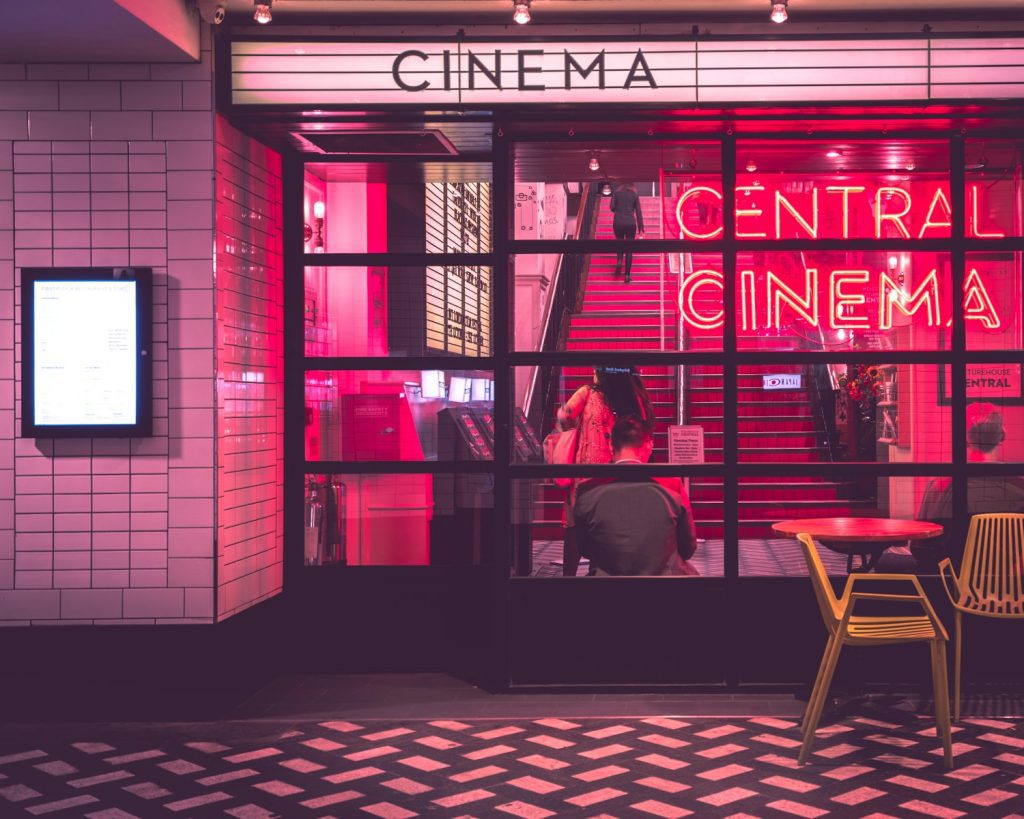

Cover Photo by 
This post was brought to you in collaboration with our partner site Behind the Score. Discover the Harmony Secrets of Modern Film and Video Games.
Master the art of film music composition with everything you need to know about creating impactful scores. Complete Collection Study Pack is currently on sale for 67% off:

“The relationship between film and music is one of the most fascinating aspects of early cinema, evolving from the silent era to the introduction of synchronized sound. The integration of music with moving pictures transformed the cinematic experience, creating a new art form that combined visual storytelling with auditory emotion.”
Table of Contents
The Silent Film Era: Music as a Necessary Companion
In the late 19th and early 20th centuries, cinema began as a silent medium, with no synchronized sound accompanying the images on screen. However, silent films were rarely truly “silent.” Instead, they were almost always accompanied by live music, which played a crucial role in the viewer’s emotional experience. The earliest silent films were typically shown with live pianists or small orchestras playing scores that could range from classical music to popular tunes of the day. These musicians adapted their performances to the moods and actions on the screen.
Before the arrival of synchronized sound, films were silent. This did not mean they were devoid of sound. On the contrary, theaters employed various methods to provide aural accompaniment to the visuals. These methods included:
- Live Musicians: The most common form of accompaniment was live music. A pianist or small ensemble would play during the film, often improvising based on the action on screen.
- Recorded Music: In some cases, pre-recorded music was played on phonographs or other mechanical devices. This allowed for greater consistency and control over the accompaniment.
- Sound Effects: Sound effects were created live using various techniques, such as hitting objects together or blowing into pipes.
Despite these efforts, the silent era was limited in its ability to convey dialogue and other sounds realistically. This limitation was a major obstacle to the development of more complex storytelling techniques.
Read 👉 12 Film Composers You Should Know (but probably don’t)
Challenges in Synchronizing Sound

 Jeremy Yap
One of the major challenges in the early years of film was achieving synchronized sound. Early attempts, such as Edison’s Kinetoscope, were limited in success because the technology to accurately synchronize sound with moving images was lacking. The Kinetoscope could display films and play music, but the sound wasn’t coordinated with the visuals, often leading to dissonance.
Another method was to use phonographs to play soundtracks alongside the film, but keeping the music in sync with the images was an ongoing problem. However, the importance of music never waned. Filmmakers realized that well-coordinated music would greatly enhance the experience.
👉 Up to 40H battery life and speed charge: JBL Tune 510BT: Wireless On-Ear Headphones
👉 Best-selling music method book for film composers: Turn Theory into Music – Behind the Score.
Innovations Leading to Synchronized Sound
The first experiments with synchronized sound in films date back to the early 1900s. However, it was not until the late 1920s that the technology became practical for widespread use. Several key developments led to the breakthrough:
- Sound Recording Technology: The invention of reliable sound recording devices, such as the phonograph and the optical sound recorder, made it possible to capture and reproduce sound accurately.
- Sound Reproduction Technology: The development of loudspeakers and other sound reproduction equipment allowed for the amplification and distribution of sound in theaters.
- Film Synchronization Technology: Techniques were developed for synchronizing sound with the images on film. This involved using special cameras and projectors that could record and project sound simultaneously.
The major breakthrough came in the 1920s with the advent of sound-on-film technology. Lee De Forest developed a process called Phonofilm in 1923, which could record sound directly onto the filmstrip. Phonofilm laid the groundwork for later sound systems but didn’t achieve widespread success.
The real leap forward came in 1926 with Warner Bros.’ Vitaphone system, which synchronized recorded sound with film. This system played a phonograph record in sync with the projector, allowing for sound effects, music, and even dialogue to accompany the film. Vitaphone’s success culminated in the release of The Jazz Singer in 1927, a landmark film that marked the beginning of the “talkies (Talking Pictures)” era. Though not the first film to incorporate sound, it was the first commercially successful film to feature synchronized dialogue and music, creating a sensation and signaling the end of the silent film era.
The Jazz Singer and the Birth of the Talkies
The Jazz Singer was a turning point for synchronized sound in cinema. Released in 1927 by Warner Bros., it was one of the first feature-length motion pictures with synchronized dialogue. The film featured Al Jolson, a popular singer, performing several musical numbers, while dialogue sequences were synchronized with the action. This innovation represented a major technological breakthrough in filmmaking, and the movie’s success made synchronized sound a permanent fixture in cinema.
The advent of synchronized sound not only revolutionized the technical aspects of filmmaking but also reshaped the film industry. Studios scrambled to convert to sound, and by the early 1930s, the majority of Hollywood films incorporated synchronized dialogue, music, and sound effects. The term “talkies” became synonymous with this new era of cinema, in which sound and image were seamlessly merged to create a more immersive experience.
The Role of Film Composers in the Early Sound Era
With the transition to sound, the role of the film composer evolved significantly. In the silent film era, music had been played live and often improvised by theater musicians. But as films began to include synchronized music, the role of the composer became more important, and original scores were increasingly tailored to the specific needs of the film.
Some of the most influential early film composers include:
- Max Steiner: Steiner is often considered the father of the film score. He composed scores for many classic films, including Gone With the Wind and Casablanca.
- Alfred Newman: Newman was another prolific film composer who wrote scores for a wide range of films, from comedies to dramas.
- Erich Wolfgang Korngold: Korngold was a classical composer who also wrote scores for several Hollywood films, including The Adventures of Robin Hood.
Composers like Max Steiner, known for his work on King Kong (1933) and Gone with the Wind (1939), played a pivotal role in the early development of film music. Steiner’s groundbreaking work in these films demonstrated how music could be used not just as background accompaniment, but as an integral part of the narrative, heightening drama, emotion, and suspense.
The music in early sound films was often lush and orchestral, reflecting the popular musical styles of the time. Composers worked closely with directors to ensure that the music matched the tone and pacing of the film, and this collaboration laid the groundwork for the symbiotic relationship between film and music that continues to this day.
Technological Advancements in Sound Recording
The transition to synchronized sound was driven by a series of technological advancements. By the early 1930s, sound-on-film had become the dominant technology, replacing the older sound-on-disc systems. The sound-on-film process, which involved recording sound directly onto the film strip, allowed for greater synchronization and quality control. The system also enabled filmmakers to record sound and dialogue more easily during production, making the post-production process simpler and more efficient.

One of the most significant advancements in this period was the introduction of the Movietone sound system, developed by Fox Film Corporation. Movietone allowed sound to be recorded optically onto the film, greatly improving synchronization and audio fidelity. This innovation quickly became the industry standard, further cementing the role of sound in cinema.
Impact on the Film Industry and Audience Experience
The introduction of synchronized sound fundamentally changed the way films were made and experienced. Silent film actors, who had relied on exaggerated physical gestures to convey emotions, now had to adapt to dialogue-driven performances. This shift also gave rise to a new generation of stars who were known for their voices as much as their appearance.
For audiences, synchronized sound transformed the cinema experience. Films became more immersive as dialogue, sound effects, and music could be woven together to create a richer, more dynamic world. Audiences could now hear the voices of their favorite actors and experience the full range of sound in scenes, from bustling city streets to the thunderous roar of an explosion. The addition of synchronized music heightened the emotional impact of the story, guiding viewers’ reactions and deepening their connection to the characters on screen.
The Legacy
The early years of synchronized sound in film marked a revolutionary moment in cinema history. The transition from silent films to talkies opened up new artistic possibilities for filmmakers, allowing them to use music, dialogue, and sound effects to enhance storytelling in ways never before possible. This period laid the foundation for the modern film industry, where music and sound remain integral to the cinematic experience.
Today, film composers like Hans Zimmer, John Williams, and others continue the tradition of creating iconic scores that shape how audiences perceive the stories on screen. The legacy of early synchronized sound continues to influence both filmmakers and musicians, as they seek to push the boundaries of what is possible in cinema.
Read 👉 12 Film Composers You Should Know (but probably don’t)
This post was brought to you in collaboration with our partner site Behind the Score. Discover the Harmony Secrets of Modern Film and Video Games.
Master the art of film music composition with everything you need to know about creating impactful scores. Complete Collection Study Pack is currently on sale for 67% off: