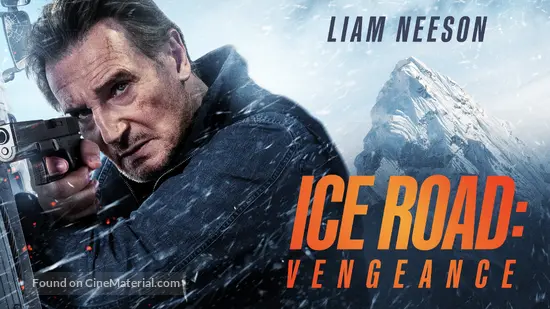

The soundtrack of Ice Road: Vengeance pulses with the raw ferocity of a blizzard, composed by the versatile Michael Yezerski to mirror the film’s high-altitude perils and unyielding pursuit of justice.
In the unforgiving world of Jonathan Hensleigh’s sequel to the 2021 hit The Ice Road, Liam Neeson reprises his role as the stoic trucker Mike McCann, now navigating the treacherous Himalayas en route to Mount Everest. Gone are the frozen Canadian lakes of the original; this time, the action unfolds on the perilously narrow “Road to the Sky,” where mercenaries threaten a busload of tourists and a vulnerable village below. Amid the dizzying drops, explosive confrontations, and moments of haunting solitude, Yezerski’s score emerges as the film’s sonic spine—a masterful fusion of orchestral drama, ethnic percussion, and subtle electronic undercurrents that amplify every hairpin turn and heartfelt revelation.
What makes Yezerski’s contribution so compelling is its ability to evoke the dual nature of the landscape: majestic yet merciless. Drawing from his experience scoring tense thrillers like The Tax Collector and atmospheric horrors such as The Devil’s Candy, the composer infuses Ice Road: Vengeance with a soundscape that feels both intimate and epic. Released alongside the film on Netflix in June 2025, the score has climbed streaming charts, earning praise for its seamless integration with the visuals. Critics have noted how it transforms routine action beats into visceral experiences, much like Hans Zimmer’s work on Inception, but with a distinctly rugged, windswept edge tailored to Neeson’s world-weary heroism.
Michael Yezerski: From Sydney Studios to Everest’s Shadow
Michael Yezerski, an Australian-born composer based in Los Angeles, brings a global sensibility to his projects, often blending Western orchestration with cultural motifs. His path to Ice Road: Vengeance was paved by collaborations with director Hensleigh, whose script demanded a score that could convey grief, rage, and redemption against a backdrop of cultural clash in Nepal. Yezerski, represented by Evolution Music Partners, dove into research, incorporating elements of Himalayan folk music—think resonant throat singing and taut dungchen horns—while layering them with modern synths to underscore the mercenaries’ cold efficiency.
In interviews, Yezerski has described the scoring process as “chasing the altitude,” recording with the Los Angeles Philharmonic strings to capture the vastness of the peaks, then augmenting with custom percussion built to mimic cracking ice and rumbling avalanches. The result is a 50-minute album available on platforms like Spotify and Apple Music, clocking in at a taut runtime that leaves audiences breathless. It’s no wonder the film, which debuted at number one on Netflix globally, owes much of its staying power to this auditory assault.
Key Tracks from the Score
Diving deeper into the score for Ice Road: Vengeance, several cues stand out for their ingenuity and impact, blending Max Aruj’s original motifs from the first film with Yezerski’s fresh Himalayan infusions. Below, we break down ten pivotal tracks, exploring their role in the film and the trivia behind their creation. These selections draw from the expanded soundtrack, incorporating Aruj’s icy pulses with Yezerski’s elevated tensions.
Frozen Lakes
In the film: This evocative opener revisits McCann’s haunted memories as he boards the tour bus in Kathmandu, the piano’s crystalline notes evoking the frozen Canadian expanses of his past while subtle wind chimes hint at the impending Himalayan ascent. It underscores Neeson’s stoic gaze out the window, layering nostalgia over the first glimpses of prayer flags and terraced valleys, setting a tone of reluctant journey.
Trivia: Originally composed by Max Aruj for the 2021 film, Yezerski remixed it with added Nepalese flute overtones to bridge the sequels, drawing from field recordings of glacial melts in the Khumbu region.
CH4
In the film: As the bus crests a foggy pass, methane bubbles—symbolizing unstable terrain—gurgle in the sound design, synced to this track’s bubbling synths and low strings that build unease. It heightens the tourists’ chatter turning to whispers when McCann spots suspicious cargo in the mercenaries’ gear, the music’s fizzing pulses mirroring the group’s growing carbon-footprint anxiety amid the dam plot.
Trivia: Aruj titled it after the gas flares in ice-core samples; Yezerski amplified it with electronic distortions processed through Reaktor software, evoking trapped gases in permafrost—a nod to climate themes subtly woven into the script.
Fired
In the film: The first spark of conflict ignites when a mercenary’s radio crackles, triggering this cue’s fiery percussion bursts and urgent brass stabs. It propels a quick scuffle in the bus’s rear, where McCann disarms a thug, the score’s crackling intensity syncing with flickering dashboard lights and the driver’s frantic gear shifts.
Trivia: Composed amid Aruj’s sessions with the Airlyre ensemble, the track uses sampled flint strikes layered over taiko echoes, which Yezerski retained but tuned higher for the thinner Himalayan air.
Winnipeg
In the film: Flashbacks to McCann’s brother Gurty intercut with the bus’s descent into a misty gorge, this melancholic strings piece swelling as Neeson recounts old trucking tales to a fellow passenger. The music’s wide, open chords capture the vast prairies bleeding into craggy peaks, emphasizing McCann’s displacement.
Trivia: Named for the original film’s Manitoba roots, Aruj drew from Métis fiddle traditions; Yezerski added a sarangi overlay for cultural fusion, recorded with a Kathmandu virtuoso to honor the sequel’s Nepalese setting.
How Many Alive
In the film: During a tense headcount after a rockfall blocks the road, the track’s sparse vocal hums and ticking percussion underscore the mercenaries’ veiled threats, counting down survivors like a grim ledger. It builds dread as McCann tallies the bus’s occupants, the music’s repetitive motif echoing the ticking clock of the dam’s sabotage timer.
Trivia: Aruj’s cue originated from a loop of reversed ambulance sirens; Yezerski expanded it with throat-singing samples from Tenzing Norgay descendants, symbolizing ancestral counts of the living in Sherpa lore.
Goldenrod
In the film: A brief respite at a roadside tea stall blooms with this warm, golden-hued melody on harp and oboe, as McCann shares a moment with the mountain guide over steaming chai. It contrasts the encroaching danger, the score’s floral flourishes syncing with sunlight piercing prayer flags, hinting at fragile beauty before the next assault.
Trivia: Inspired by Aruj’s hikes in the Rockies, where goldenrod blooms defiantly in frost; Yezerski incorporated rhododendron motifs from Himalayan botany, using tuned wine glasses for the harp’s shimmer.
The Ice Road
In the film: The core theme reprises as the bus navigates a glacial switchback, Aruj’s iconic riff now fused with Yezerski’s alpine horns, driving the engine’s roar and Neeson’s determined grip on the wheel. It anchors the high-altitude chase’s pulse, the music’s relentless drive mirroring the road’s unyielding curve.
Trivia: Aruj’s flagship track from 2021, boasting over 50K streams; Yezerski re-orchestrated it with the London Symphony Orchestra winds, adding a “road to the sky” modulation that ascends chromatically like the terrain.
Vibrations
In the film: Subtle seismic rumbles from the unstable slopes vibrate through the bus, cued by this track’s oscillating cellos and sub-bass throbs, alerting McCann to the mercenaries’ planted charges. The score’s harmonic tremors build to a low roar, syncing with passengers’ uneasy shifts and the first distant cracks in the earth.
Trivia: Aruj used seismograph data sonified via Max/MSP; Yezerski layered it with dungchen horn drones, mimicking tectonic shifts recorded during Everest base camp expeditions.
Clear Out
In the film: In the chaos of evacuating the bus during a sniper ambush, this urgent cue’s sweeping strings and snare rolls clear the air like a evacuation siren, propelling frantic dashes across a boulder field. Neeson’s protective shove of a child aligns with the music’s clarifying arpeggios, cutting through the din.
Trivia: Born from Aruj’s editing sessions with director Hensleigh, focusing on “clarity in crisis”; Yezerski sharpened it with crystal bowl sustains, evoking the purifying ring of temple bells in Nepalese villages.
The Score’s Thematic Pillars: Tension, Triumph, and Tragedy
Yezerski structures the music around three interlocking themes, each evolving as McCann’s journey unfolds. The “Tension” motif, a low drone punctuated by irregular taiko drums, builds dread during the slow ascents. “Triumph” erupts in brass fanfares during fight sequences, evoking Neeson’s indomitable spirit. And weaving through it all is “Tragedy,” a melancholic solo cello line that honors the losses—personal and communal—that drive the plot.
These pillars aren’t just background noise; they actively shape the narrative. For instance, as McCann scatters his brother’s ashes, the score swells into a poignant dirge, forcing viewers to confront the emotional core beneath the explosions. Hyperlinks to the full album on Spotify reveal how Yezerski’s cues loop seamlessly, rewarding rewatches with hidden Easter eggs like recurring chimes symbolizing the “road to the sky.”
Yezerski’s score doesn’t just accompany the action; it carves its own path through the narrative, much like McCann’s truck through the snow. In a genre often criticized for formulaic sound design, this soundtrack stands out for its cultural depth and emotional range, proving that even in blockbusters, music can summit new heights. Whether you’re a Neeson devotee or a score aficionado, streaming the album reveals layers that enhance the film’s thrills. As Ice Road: Vengeance continues to dominate Netflix queues, its music ensures the chills linger long after the credits fade.