Cover Photo by Geoff Leonard
This post was brought to you in collaboration with our partner site Behind the Score. Discover the Harmony Secrets of Modern Film and Video Games.
Table of Contents

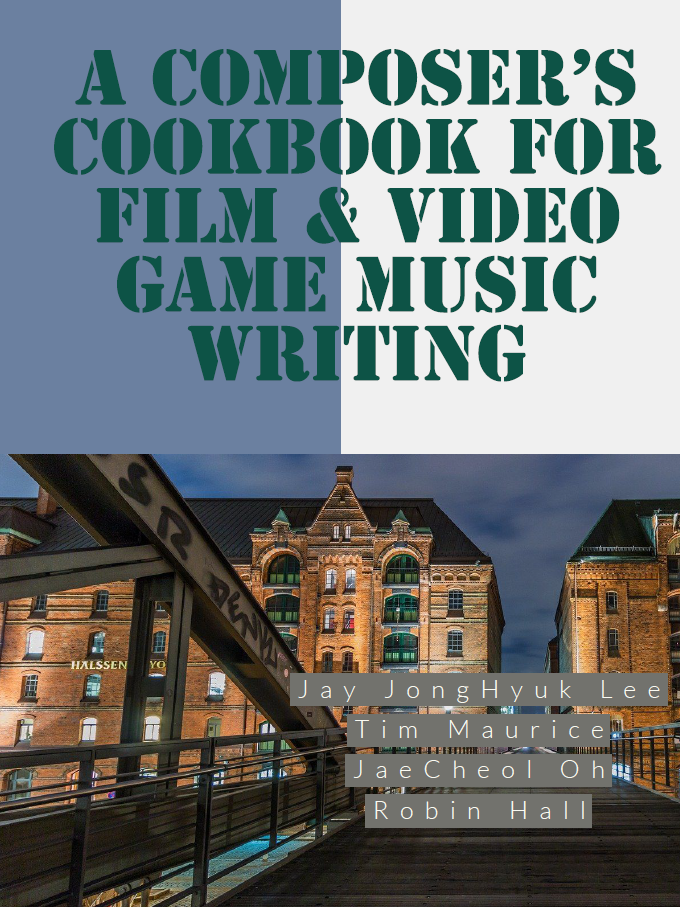
After much patience, endurance, and hard work, we are thrilled to announce that “Behind the Score” is now available as a book! We began this project in 2018, and over six years have passed since then. We had hoped to publish the book much earlier, but we quickly learned that writing a music textbook involves an endless process of writing and fixing errors …
Nevertheless, we are very happy to announce that the 1st edition is finally here! We want to thank everyone in the FMT & Behind the Score community for their tremendous support over the years.

“For those who may not know, Behind the Score was originally a project to create a method book for film music composers. In 2022, we launched it as an online text course, which was a major success and led us to create video courses and YouTube videos as well. We are also including a brief introduction to the book (as written on Amazon), along with words from the authors, to give a better understanding of the book.”
A brief introduction to the book as written on Amazon:
Turn theory into music with this academic resource for up-and-coming composers. This book is the original source for the renowned online music course “Behind the Score.” It’s designed to showcase some of the most distinctive compositional techniques used by media composers past and present. Unravel the mystery behind the sounds you hear with music theory!
Authored by four prominent composers actively engaged in film composition, video game scoring, and music education, this book provides students with concepts to help generate their own compositions. The selected topics in the book are highly practical for contemporary media music composers and can be readily applied as you work through each chapter.
The writing credits of our authors include music for films, TV networks (Discovery Channel, NBC Universal), documentaries, games (MapleStory series, KartRider), and advertising campaigns for blockbuster films like Top Gun: Maverick (2022), CrossfireX (2022), Aladdin (2019), and many others.
Forewords
Tim Maurice
I’ve always enjoyed figuring out what makes a piece work. What is going on? And what about it do I like? (or not like!) This has been my approach as one of the authors for this book and the online courses. I try to make sense of what we’re hearing, and to explain how all the components fit together. From there, you can take what is useful and apply it to your own writing.
If you are new to composing music, this book/course might not be the best starting point. However, it may be a good fit if you are: (1) comfortable with scales, chords, and music notation; (2) familiar with functional harmony and analyzing music; and (3) you have some experience writing music. The book is mainly intended for someone who would like to expand their toolset.
***
I’ve always identified as more of a composer than a performer. I grew up studying piano, and I learned a little theory along the way. But I never had formal composition lessons as a child. Initially, I learned to write music by trial-and-error, by using my ear and experimenting. While studying classical piano, I loved figuring out how to play the pop and rock songs I heard on the radio. I think this period of experimentation was invaluable to me, as it helped me figure out how to put music together.
Later on, in college, I learned more about structure. This formal teaching helped me organize what I was hearing. At Bates College, I studied music theory from a more classical perspective, where I learned about functional harmony, counterpoint, and other concepts. At Berklee College of Music, I learned from a more pop- and jazz-oriented point of view (jazz harmony using “tensions,” 2-5-1 structures, orchestration, and more). I find it useful to draw upon these different approaches when I’m trying to understand a piece, and I’m reminded that there are multiple ways to interpret a musical work. Today, as a freelance musician, I divide my time between composing music for film, teaching, orchestrating, and performing.
I joined this project roughly four years ago, and over time my involvement grew. This book and the online courses are a direct result of our collaborative efforts. We’ve all worked diligently to provide numerous examples and illustrate the concepts as clearly as we can. Like the motto of ‘Behind the Score,’ I hope this book helps you “turn theory into music.” I wish all of our readers the best in their musical endeavors and a bright future in music composition.
Jay JongHyuk Lee
“Everyone could teach me what the theory was, but no one was able to teach me how I should assemble that theory into a good piece of music”
* * *
Being a music enthusiast as a kid, I took my first “official” music composition lesson at the age of 10. While I was an okay child pianist, becoming a lifelong composer had always been my dream as a kid. After spending a year learning intervals, chords, scales, and part-writing, my instructor suggested that I start writing music using the theories we had studied. Standing in front of a huge piece of manuscript paper, I was puzzled. “Exactly how and when am I supposed to use all this stuff I’ve learned?”
Fast forward 10 years later. As a music college student, I was pounded with a huge range of theories: modal harmony, compound chords, reharmonization, etc. School lectures were good, and theory books useful, yet the same question lingered in my mind. Everyone could teach me what the theory was, but no one was able to teach me how I should assemble that theory into a good piece of music. Sure, learning what modes are and how they are structured helped in becoming a better musicologist but it didn’t do much in terms of becoming a better composer. Learning the diminished scale’s structure was one thing but actually applying the scale in practical writing was another.
In order to overcome my frustration, I started transcribing works by famous film and classical composers that intrigued me and kept notes of the theories I learned through transcription. There were many elements I took notice of: Bernard Hermann and Alex North’s use of bitonality in music, chromaticism in Ravel’s Daphnis et Chloé Suite No. 2, the unique tonal structure of David Raksin’s work for the film Laura (1944), compound scales in the music of John Williams and Alan Silvestri, the flawless rhythmic deception of Don Davis’ soundtrack for The Matrix (1999), and the list goes on.
Many of these fine works helped me to glue together the scattered dry theories in my head, bringing them to life. Studying this way immensely improved my ability as a composer and connected the gap between what I learned through books and what I was hearing.
* * *
In the year 2012, with a degree in composition in hand, I began my career as a freelance musician writing for indie films, working on petty sound design and writing jingles for local corporations. After spending another year working at a music game app development company, I was lucky enough to land a role as a full-time in-house composer at a video game company that I always wanted to work at, and where I continue to work.
 Our book-in-progress
Working as an in-house composer has changed the way I write and view composition. There is not much space for “no” and I don’t have the leisure of selecting work to my own taste. Time is always the main concern since writing music isn’t my sole duty. It is just a part of my many other daily tasks including endless meetings as well as booking and attending recording sessions, to name just a couple (and not forgetting the many coffee breaks with my coworkers!) This, of course, is not ideal, but it is the reality of the job. Such constraints meant I had no choice but to pursue my study further to develop my skills as a composer. Not only did I need to write faster, but I had to learn to deliver diverse emotions more accurately since the requests were often specific: a “dry atmosphere but with an air of tension,” or an “expression of hysteria but not anger.” (At the time, listening to and examining the music of early twentieth-century composers such as Stravinsky or Schoenberg offered direction.) Simultaneously, I took the chance to widen my musical spectrum by getting accustomed with less familiar styles including Flamenco, Arabian, Celtic, Oriental, etc. My study focused not only on understanding the harmonic ideas behind the music but understanding the way instruments and their timbre were used to control the audience’s perception.
I documented the insights I gained during this period in my music journal which I’ve been keeping since my college years. Although I no longer need to reference my journal for each and every piece that I write, I still look up my notes for their wisdom and for inspiration. Now it has become the original source of the courses presented on this website so I can share that knowledge with you.
For the past four years, I and my wonderful colleagues actively working as admired composers, performers, and faculty members, have worked to flesh out dry memos with musical examples that can contextualize theory in an approachable manner which is applicable to actual songwriting.
Our goal was to create an academic resource which will help students to enjoy the learning process and from which they can easily adapt ideas to come up with their own. We’ve only selected the topics that we believe to be the most practical to modern media music composers which can be readily used upon finishing each course.
We all understand that there is no magical path to becoming a great composer overnight. As with all things, the best composers improve their craft through practice and constant learning. One of the joys of learning music theory is unraveling the mystery behind the sound which you had only ‘understood’ with your ears beforehand. Once the theory is assimilated and you have a full grasp of the concept, you can start analyzing and applying it to your own music (and even determine when to throw theory out).
While there’s no shortcut to becoming a great composer, we believe there’s always a better academic approach that can help you through the process. Our aim has always been that the courses presented here offer new perspectives on songwriting and composition, and most importantly provide you an opportunity to learn music theory in the context of actual music. We hope our efforts mean your journey to becoming a great musician is an enjoyable one.
Robin Hall
“The material in this course is designed to highlight some of the most idiosyncratic compositional techniques employed by media composers past and present. From Silent Films and Videogames, Sci-Fi to Action Blockbusters from Film Trailers and TV Commercials … “
* * *
How does music create emotion? And what devices can we, as composers use to get that emotional impact to resonate with the audience?
This is the question that I ask myself the most when starting a new scoring project. Regardless of whether I’m writing music for a blockbuster film trailer or scoring a student film my intent is always the same, to maximize the emotional impact of the scene through the use of smart compositional devices.
During my studies and subsequent career as a composer, I’ve come across a lot of textbooks and music courses which deal with the theoretical side of composition, but have found very few that contextualize that information in a clear use case for the end user. In other words, how do we now apply what we have learnt to our own music?
My hope is that all users of this course will be able to quickly and effectively apply these concepts to their own music. Whether you work through this material step-by-step or you pick and choose the sections which most appeal to you, I believe this will be a useful compendium of musical ideas suited for composers of all skill level and backgrounds.
The material in this course is designed to highlight some of the most idiosyncratic compositional techniques employed by media composers past and present. From Silent Films and Videogames, Sci-Fi to Action Blockbusters from Film Trailers and TV Commercials, each c omposer’s goal is the same, to score the emotion of the scene.
This course will cover a broad range of topics. For instance, we will look at the seven modes of the major scale and how to utilize the unique sound of each one to great effect. We will study how ostinatos, rhythms and time signatures can be manipulated to create forward motion, excitement and tension, and we will observe how modulating simple ideas (such as triads) can create surprising and otherworldly effects in our own music.
Throughout this course we have provided score analysis and recommended listening examples from well-known Film, TV and Video Game scores to support the content in each section. Furthermore, we have also provided original compositions (with both score and supporting audio) to further support the material in each section and demonstrate how these concepts can be applied to your own music.
This course is not designed to teach the student how to score music to picture from a technical perspective, but rather, to serve as a guide for the user to further develop their musical vocabulary as it applies to scoring for media.
This course is also not meant to be a ‘one size fits all’ approach to scoring, meaning that the music examples in this course display how these techniques commonly are used but should not necessarily be limited to only that use.
By no means are we suggesting that these concepts are the only way to achieve the desired result, but rather my hope is that they serve as a springboard to further develop your own musical ideas and even provide inspiration for the composer.
Writing music is not an exact science and we all perceive, feel and interpret sound differently. Some of the ideas put forward in this curriculum, in many respects, have become cliches within the Film and Video Game scoring world because these devices are effective. They help the composer under tight deadlines deliver large quantities of music, and they are effective at achieving the desired result for the end consumer (the audience).
It is however up to you, as the composer to decide how and when you want to use these techniques. I would personally encourage you to use or dismiss these ideas in your own music however you see fit.
Whilst the material in this course is not aimed at beginners (and a basic understanding of music theory is assumed throughout) we have tried to keep the theoretical analysis as clear and concise as possible, so that users from all levels of understanding may benefit.
As with many things in life, you will get out of this what you put into it. Spend time with the material in this course, reflect on how these sounds make you feel but most of all, be guided by your own intuition. Be brave and forge your own way forward.
Robin Hall
Cover Photo by Geoff Leonard
This post was brought to you in collaboration with our partner site Behind the Score. Discover the Harmony Secrets of Modern Film and Video Games.