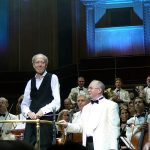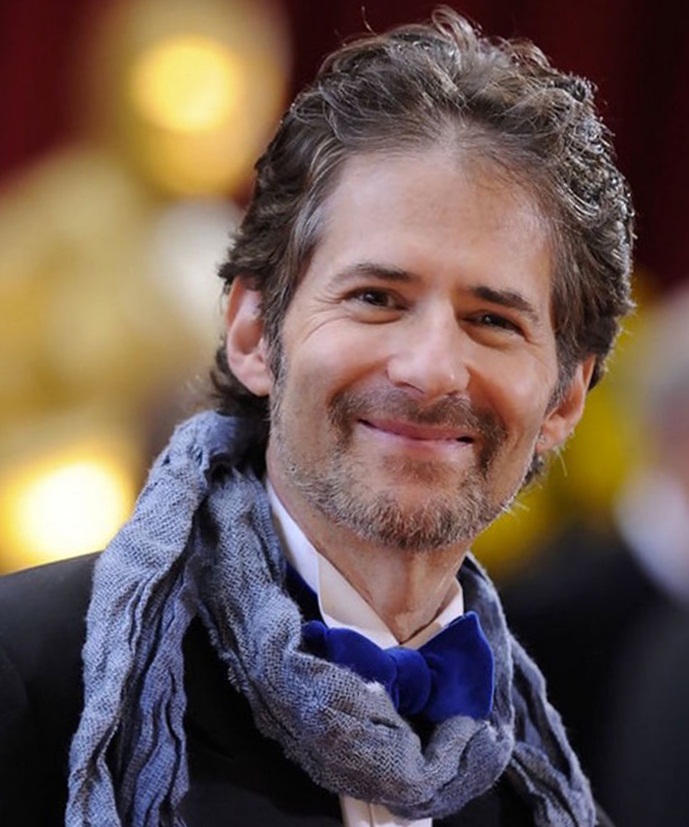

Cover Photo by FERT98
Master the art of film music composition with everything you need to know about creating impactful scores. Complete Collection Study Pack (Enter 25FMT at the checkout for instant 25% off)

James Roy Horner was one of the most influential and prolific film composers of the 20th and early 21st centuries. His ability to create emotionally resonant scores that perfectly complemented the visual storytelling of films made him a favorite among directors and audiences alike. This article explores the life, career, and lasting impact of this musical genius.
Early Life and Musical Beginnings
James Roy Horner was born on August 14, 1953, in Los Angeles, California. Growing up in a musical family, Horner was exposed to music from a young age and began playing the piano when he was just five years old[7]. This early introduction to music would lay the foundation for his future career as one of Hollywood’s most celebrated composers.
Horner’s formal musical education began at the Royal College of Music in London, England. After his time in London, he returned to the United States to continue his studies. He earned a bachelor’s degree in music from the University of Southern California and later completed both a master’s degree and a Ph.D. in Music Composition and Theory at the University of California, Los Angeles (UCLA)[7].
During his time at UCLA, Horner began to explore the world of film scoring. He started composing music for student films at the American Film Institute in the late 1970s, which provided him with valuable experience and opened doors to future opportunities in the film industry[7].
Breaking into Hollywood
Horner’s entry into mainstream Hollywood came with his work on Star Trek II: The Wrath of Khan (1982)[7]. This project marked a significant turning point in his career, showcasing his ability to create grand, orchestral scores that could enhance the emotional impact of a film. The success of this score led to numerous other film offers and opportunities to work with world-class performers such as the London Symphony Orchestra.
Throughout the 1980s, Horner continued to build his reputation in Hollywood. He composed memorable scores for films like Cocoon (1985), Aliens (1986), and Willow (1988). His work on Aliens earned him his first Academy Award nomination, signaling his arrival as a major force in film composition[1].
Rise to Prominence: The 1990s
The 1990s saw Horner reach new heights of success and critical acclaim. He composed scores for some of the decade’s most beloved and successful films, including The Rocketeer (1991), Legends of the Fall (1994), Apollo 13 (1995), and Braveheart (1995)[1].
His score for Braveheart is particularly noteworthy for its beautiful blend of Scottish and Irish influences, perfectly capturing the film’s themes of freedom, love, and sacrifice[2]. The score earned Horner another Academy Award nomination and remains one of his most celebrated works.
Titanic: A Career-Defining Moment
In 1997, Horner composed the score for James Cameron’s epic romance “Titanic.” This project would become the defining moment of his career. The film’s soundtrack was a global phenomenon, selling over 30 million copies worldwide[2]. The movie’s theme song, “My Heart Will Go On,” performed by Celine Dion, became an international sensation and won the Oscar for Best Original Song.
Horner’s score for “Titanic” perfectly captured the film’s themes of love, tragedy, and the indomitable human spirit. His use of Celtic influences and haunting vocals created a timeless soundscape that continues to resonate with audiences today. For his work on “Titanic,” Horner won two Academy Awards – one for Best Original Dramatic Score and another for Best Original Song[1].

Continued Success and Innovation
Following the monumental success of “Titanic,” Horner continued to produce outstanding work in the late 1990s and early 2000s. He composed memorable scores for films like “The Mask of Zorro” (1998), “Bicentennial Man” (1999), and “The Perfect Storm” (2000)[1].
In 2001, Horner created another masterpiece with his score for Ron Howard’s “A Beautiful Mind.” The film tells the story of John Nash, a brilliant mathematician struggling with schizophrenia. Horner’s score, with its haunting piano melodies and ethereal vocals, perfectly captured the film’s themes of genius, madness, and love. This work earned him another Academy Award nomination[2].
Collaboration with James Cameron: Avatar
In 2009, Horner reunited with director James Cameron for the groundbreaking film “Avatar.” This project presented unique challenges, as Horner had to create music for an entirely new alien world. Rising to the occasion, he crafted a score that blended orchestral elements with world music influences and electronic sounds, creating a rich and immersive auditory experience that complemented the film’s revolutionary visual effects[2].
The score for “Avatar” further cemented Horner’s reputation as one of Hollywood’s most versatile and innovative composers. It earned him several award nominations and contributed to the film becoming the highest-grossing movie of all time at that point[1].
Musical Style and Approach
James Horner’s compositional style was characterized by its emotional depth, innovative orchestration, and ability to perfectly complement the visual narrative. He was known for his integration of choral and electronic elements alongside traditional orchestrations, and for his use of motifs associated with Celtic music[1].
Horner’s approach to film scoring was highly collaborative. He worked closely with directors to understand their vision and how music could enhance the storytelling. His ability to adapt his style to different genres and directorial visions while maintaining his unique voice was one of his greatest strengths.
One of Horner’s most notable traits was his willingness to experiment with unconventional instruments and sounds. This innovative approach to instrumentation allowed him to create unique sonic landscapes for each film he scored. For example, in “Titanic,” he incorporated Uilleann pipes and other Celtic instruments to evoke the film’s Irish themes[2].
Horner was also known for his ability to write both grand, sweeping themes and more intimate, character-driven pieces. His score for “Field of Dreams” (1989), for instance, beautifully captures the film’s themes of family, redemption, and the magic of baseball with its gentle, nostalgic melodies[4].
Legacy and Impact
James Horner’s impact on the world of film music is immeasurable. Over the course of his career, he worked on more than 100 films, earning two Academy Awards, two Golden Globe Awards, three Satellite Awards, and three Saturn Awards. He was also nominated for three British Academy Film Awards[1][3].
Horner’s influence can be heard in the work of many contemporary film composers. His innovative use of ethnic instruments, electronic elements, and choral arrangements expanded the sonic palette of film music and inspired a new generation of composers to push the boundaries of what was possible in film scoring.
Beyond his film work, Horner also made contributions to concert music. In the 1980s, he composed a classical concert piece called “Spectral Shimmers,” which was premiered by the Indianapolis Symphony Orchestra[7]. This demonstrated his versatility as a composer and his deep understanding of musical form and structure beyond the realm of film scoring.
Tragic End and Posthumous Works
Tragically, James Horner’s life was cut short on June 22, 2015, when his single-engine aircraft crashed in the Los Padres National Forest in California. He was 61 years old[1][3]. The news of his death sent shockwaves through the film and music industries, with many directors, composers, and actors paying tribute to his immense talent and influence.
At the time of his death, Horner had been working on several projects. In a testament to his dedication to his craft, he had already composed music for Antoine Fuqua’s “The Magnificent Seven,” which was released posthumously in 2016[3]. This final work served as a fitting coda to an extraordinary career, showcasing Horner’s ability to create stirring, emotionally resonant music until the very end.

James Horner’s life and career represent a high watermark in the history of film music. From his early days as a student composer to his status as one of Hollywood’s most respected and sought-after composers, Horner never lost his passion for music or his desire to innovate.
His body of work, comprising scores for nearly 100 films, stands as a testament to his creativity, versatility, and profound understanding of the relationship between music and visual storytelling. Whether crafting the epic, sweeping themes of “Titanic,” the otherworldly sounds of “Avatar,” or the intimate, emotional melodies of “A Beautiful Mind,” Horner consistently demonstrated his ability to enhance and elevate the films he scored.
Horner’s influence extends far beyond the specific films he worked on. His innovative techniques, willingness to experiment with new sounds and technologies, and commitment to serving the story through music have inspired countless composers who followed in his footsteps. The standards he set continue to shape the world of film music today.
“Every day, we are reminded of the power of film scores to move us, to transport us to other worlds, and to deepen our emotional connection to the stories unfolding on screen. James Horner’s legacy lives on, continuing to inspire and captivate audiences around the world.”
Citations:
[1] https://en.wikipedia.org/wiki/James_Horner
[2] https://www.yellowbrick.co/blog/music/top-10-james-horner-movies-you-need-to-watch
[3] https://www.empireonline.com/people/james-horner/
[4] https://www.musicnotes.com/blog/7-epic-james-horner-film-scores-with-sweeping-themes/
[5] https://www.jewishvirtuallibrary.org/james-horner
[6] https://en.wikipedia.org/wiki/Category:Films_scored_by_James_Horner
[7] https://www.imdb.com/name/nm0000035/
[8] https://www.filmscoremonthly.com/board/posts.cfm?threadID=151950&forumID=1&archive=0
[9] https://www.yellowbrick.co/blog/music/the-musical-journey-of-james-horner-a-composers-legacy
This post was brought to you in collaboration with our partner site Behind the Score. Discover the Harmony Secrets of Modern Film and Video Games.
Master the art of film music composition with everything you need to know about creating impactful scores. Complete Collection Study Pack (Enter 25FMT at the checkout for instant 25% off)