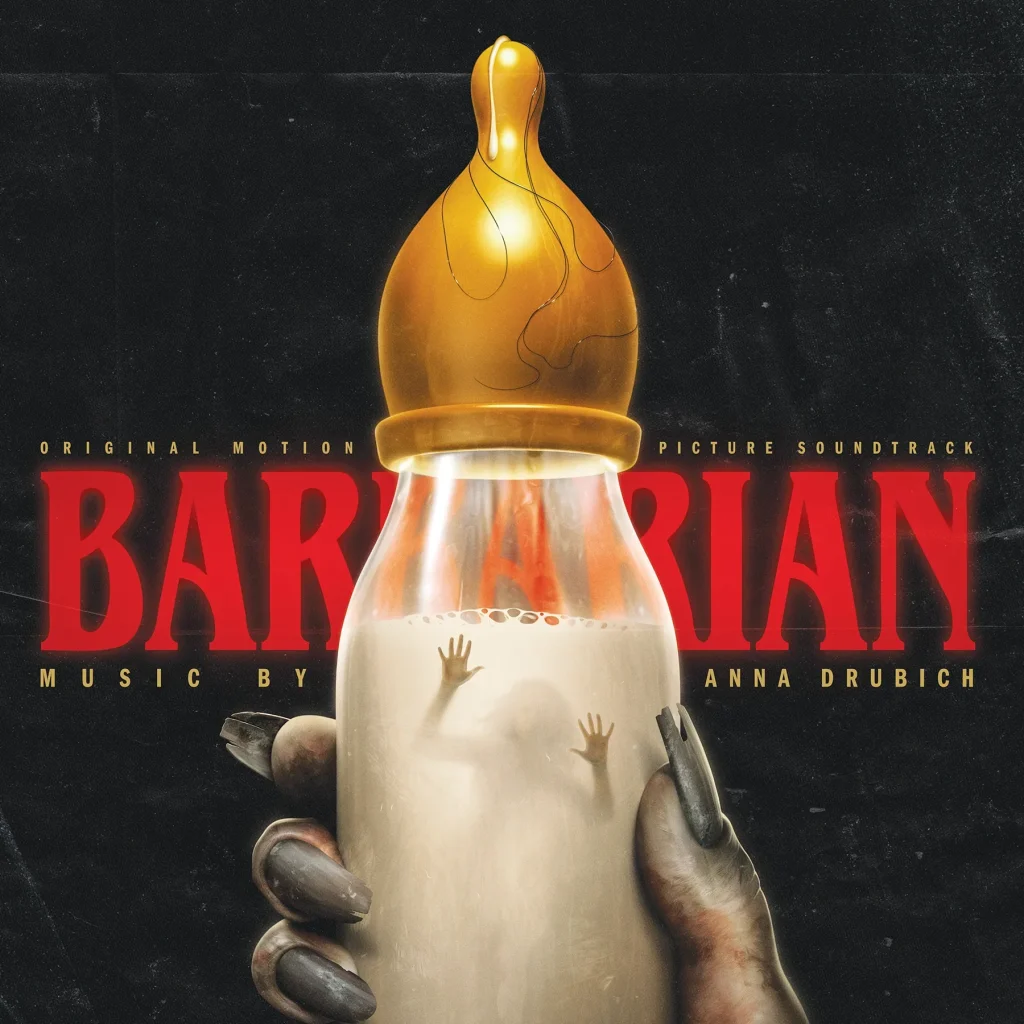

Director Zach Cregger‘s breakout horror film “Barbarian” took audiences by surprise in 2022, becoming one of the year’s most talked-about genre films. Beyond its shocking plot twists and masterful tension-building, the film’s success owes much to its meticulously crafted musical landscape. Composer Anna Drubich, known for her work on “Scary Stories to Tell in the Dark,” “Fear Street Part 3 – 1966,” and “Werewolves Within,” created the original score that transforms an already unsettling narrative into a truly visceral experience.
The story follows Tess Marshall (Georgina Campbell) who arrives at her Airbnb rental in Detroit only to discover it’s been double-booked with Keith (Bill Skarsgård). What begins as an awkward accommodation arrangement spirals into a nightmare when they discover the house harbors dark secrets beneath its foundation. The soundtrack album featuring Drubich’s score was released by Hollywood Records on December 9, 2022, containing 16 songs with a duration of 25 minutes.
The Art of Musical Horror
Anna Drubich‘s approach to “Barbarian” demonstrates how contemporary horror scoring has evolved beyond traditional orchestral arrangements. Drubich developed “a whole library of weird, processed wood-instruments, created all possible grooves and loops” that became “the foundation of the soundscape”. This innovative technique creates an organic yet unsettling audio environment that mirrors the film’s themes of natural corruption and hidden decay.
The composer’s background as an award-winning film composer from Moscow with a diverse body of work spanning live action features, animated features, television series, documentaries, and concert performances brings a unique global perspective to American horror cinema. Her previous collaborations with genre filmmakers positioned her perfectly to understand the delicate balance between supporting narrative tension and creating standalone musical moments.
Track-by-Track: Musical Examples
Here are key musical pieces—both score cues and featured songs—highlighted within the film’s narrative.
The House
In the Film: The opening track establishes the ominous atmosphere surrounding the Detroit rental property. As Tess approaches the house for the first time, Drubich’s music subtly suggests that something is amiss without revealing the true nature of the threat.
Trivia: This track serves as the musical thesis statement for the entire film, introducing the processed wood instruments and unconventional rhythmic patterns that define the soundtrack’s unique sonic palette.
Goddammit
In the Film: This track likely accompanies moments of frustration and mounting tension as characters realize their situation is far worse than initially apparent. The music amplifies the psychological pressure building throughout the first act.
Trivia: The profane title reflects the characters’ emotional states while the musical content explores themes of helplessness and escalating dread through Drubich’s innovative instrumental processing techniques.
Wake Up Keith
In the Film: Associated with Bill Skarsgård’s character, this piece explores the ambiguity surrounding Keith’s true nature and intentions. The music maintains uncertainty about whether he represents safety or additional danger.
Trivia: The track demonstrates Drubich’s ability to create musical ambiguity that mirrors character ambiguity, using harmonic and rhythmic techniques that suggest multiple interpretations simultaneously.
Down the Tunnel
In the Film: This crucial piece accompanies the characters’ descent into the underground passages beneath the house, marking the transition from psychological horror to visceral terror. The music becomes more aggressive and disorienting as the physical danger increases.
Trivia: Drubich likely employs spatial audio techniques and processed percussion to create the sensation of descending into confined, threatening spaces, making the music itself feel claustrophobic.
Keith’s End
In the Film: This track underscores one of the film’s major character revelations and shocking moments of violence. The music processes grief, shock, and the brutal reality of the situation facing the remaining characters.
Trivia: The composition balances emotional weight with forward momentum, acknowledging character loss while maintaining the narrative drive necessary for the film’s continued pacing.
Basement
In the Film: Perhaps the most terrifying musical moment in the soundtrack, this piece accompanies the discovery of the underground chambers and their horrific contents. Drubich’s score reaches peak intensity and dissonance during these sequences.
Trivia: The track likely incorporates extreme processing of traditional instruments to create sounds that feel both human and inhuman, reflecting the twisted nature of what the characters discover.
Breastfeeding
In the Film: This deeply disturbing track accompanies one of the film’s most psychologically challenging sequences, where the true nature of the underground horror is revealed through grotesque maternal imagery.
Trivia: Drubich faces the challenge of scoring extremely difficult content while maintaining artistic integrity, using music to process trauma and violation without exploiting or sensationalizing the subject matter.
The Bottle
In the Film: This piece likely underscores moments involving drugging or chemical restraint, with the music reflecting the loss of agency and consciousness that characters experience.
Trivia: The composition may incorporate slowed or distorted musical elements to mirror the effects of chemical substances on perception and cognitive function.
Leaving the House
In the Film: This track accompanies attempts at escape from the nightmare scenario, with the music building hope while maintaining underlying tension about whether true safety is possible.
Trivia: Drubich’s composition balances liberation themes with continued threat, acknowledging that physical escape doesn’t necessarily guarantee psychological recovery from trauma.
Silo
In the Film: The climactic musical piece that accompanies the film’s final confrontations and revelations. The music reaches maximum intensity while providing emotional resolution for the surviving characters.
Trivia: This track likely represents the culmination of all the soundtrack’s musical themes, bringing together processed instruments, unconventional rhythms, and emotional resonance in a final statement about survival and resilience.
The Psychology of Horror Scoring
Anna Drubich’s work on “Barbarian” exemplifies contemporary approaches to horror film music that prioritize psychological manipulation over simple startling effects. Her use of processed organic instruments creates an unsettling sonic environment that feels both natural and wrong, perfectly capturing the film’s themes about the corruption of domestic spaces.
The composer’s restraint in deploying maximum musical intensity allows the score’s most powerful moments to achieve greater impact. By carefully building tension through subtle musical techniques, Drubich ensures that when the music does reach peak horror intensity, the effect is genuinely overwhelming rather than merely loud.
Technical Innovation in Genre Scoring
The soundtrack’s emphasis on processed wood instruments represents an innovative approach to creating horror music that feels both familiar and alien. Traditional horror scoring often relies on electronic synthesis or extreme orchestral techniques, but Drubich’s organic-yet-processed approach creates a unique sonic signature that distinguishes “Barbarian” from other contemporary genre films.
This technical innovation serves the film’s thematic content, where ordinary domestic situations reveal extraordinary threats. The music mirrors this revelation by taking familiar instrumental sounds and transforming them into something unsettling and dangerous.