
Cover Photo by 
Nothing captures a hero’s journey quite like the music that belongs to them. That first blast of brass when they’re unbreakable, the way the same melody can later creep in on a solo cello when everything has gone wrong; it hits harder than any line of dialogue. A great hero’s theme isn’t frozen in time; it ages, cracks, doubts itself, sometimes even finds redemption, right alongside the character. Here are ten times composers let the music grow up with the hero, turning a simple leitmotif into a second protagonist that lives in the orchestra.
1. Superman (John Williams, 1978–2006)
The original 1978 fanfare is pure, unapologetic heroism in B♭ major: soaring strings, bold brass leaps of perfect fourths and fifths, a musical embodiment of “up, up and away.” By Superman Returns (2006), the same theme returns, but now in a minor-inflected, almost nostalgic guise—wistful woodwinds, hesitant harp glissandi, and a slower tempo. The Man of Steel is older, lonelier, and possibly broken. Williams keeps the contour intact but drapes it in regret.
2. Luke Skywalker – Star Wars (John Williams)
The Force Theme (a.k.a. Binary Sunset) begins as a noble, wide-interval hymn for a wide-eyed farm boy. In The Empire Strikes Back it becomes urgent and militarized when Luke trains on Dagobah. By Return of the Jedi it sounds almost religious. In The Last Jedi (2017), when Luke finally rises as the legend again, Williams strips it down to a solo French horn—fragile, human, then suddenly blazing with hope as he projects across the galaxy. Forty-two years, one motif, a complete emotional life cycle.
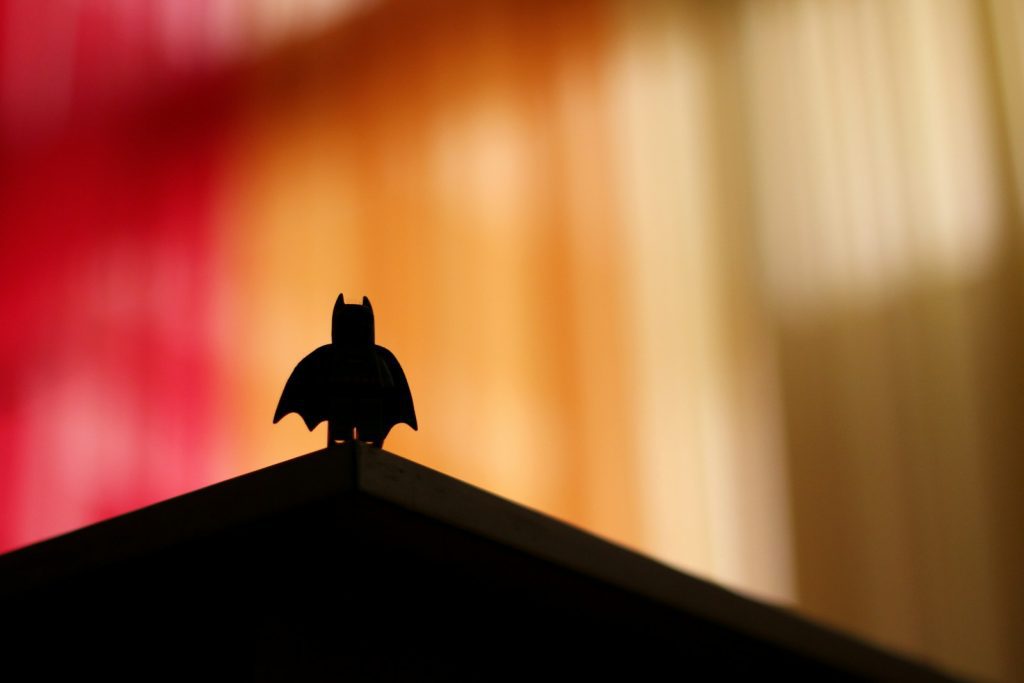
3. Batman – From Elfman to Zimmer/Reznor
Danny Elfman’s 1989 theme is gothic romance in B minor: a tragic waltz for a playboy orphan. Nolan and Zimmer flipped it into the two-note minor-second pulse (“Why so serious?”) in The Dark Knight (2008)—raw aggression and moral ambiguity. In The Batman (2022), Michael Giacchino takes Elfman’s four-note kernel and turns it into a grieving funeral march in 6/8. Same hero, three radically different emotional cores.
4. Spider-Man – From Elfman to Giacchino/Horner
Danny Elfman’s 2002 theme is youthful, acrobatic, and slightly goofy—perfect for Tobey Maguire’s awkward Peter Parker. In Spider-Man: Into the Spider-Verse (2018), Daniel Pemberton replaces it with a hip-hop-infused, turntable-scratching motif for Miles Morales. When Peter B. Parker (the burned-out version) appears, we hear a distorted, slowed-down ghost of Elfman’s theme in the underscore—literally a broken version of the hero he used to be.
5. Rocky Balboa (Bill Conti, 1976–2018)
“Gonna Fly Now” starts as a brassy underdog anthem in C major. In Rocky III it becomes a synth-pop celebration of fame. By Rocky Balboa (2006), Conti strips it to solo trumpet over a lonely boxing ring—older, slower, sadder. In Creed (2015), Ludwig Göransson re-harmonizes it with trap beats and choir for Adonis, but when Rocky himself walks in, the original 1976 trumpet line returns like a ghost. Cue tears.
6. Indiana Jones (John Williams, 1981–2023)
The Raiders March is swagger incarnate. In The Last Crusade it briefly turns tender when Indy reunites with his father (soft strings, muted trumpet). In Dial of Destiny (2023), at 80 years old, the theme limps in minor mode with solo bassoon and weary pizzicato—until the final minute, when Williams lets the full orchestra roar one last triumphant statement. Indy gets to be old and still win.
7. T.E. Lawrence – Lawrence of Arabia (Maurice Jarre, 1962)
Jarre’s soaring desert theme begins as majestic and expansive as the Arabian landscape. As Lawrence descends into arrogance and violence, the theme becomes jagged, militarized, and finally distorted with dissonant brass. By the end, when he’s a shattered man in a London hospital, we only hear faint, fragmented echoes—heroism devoured by its own myth.
8. The Man With No Name – The Dollars Trilogy (Ennio Morricone, 1964–1966)
Morricone’s iconic two-note whistle and twangy guitar start as pure cool detachment in A Fistful of Dollars. In For a Few Dollars More it gains a tragic music-box countermelody as we learn about his past. By The Good, the Bad and the Ugly, the main theme is now harmonica-driven and almost mournful—he’s still lethal, but the loneliness has fully set in.
9. Wolverine – Logan (Marco Beltrami, 2017)
Unlike most superhero films, Logan deliberately avoids a traditional heroic theme for the first two acts. Instead we get harsh, industrial textures. Only twice do we hear anything resembling a “Wolverine motif”: first as a faint, childlike music box when Laura sleeps, then finally in the last ten minutes when Marco Beltrami unveils a heartbreaking, minor-key string elegy as Logan dies. The hero never got a triumphant theme—because this time he wasn’t supposed to survive.
When composers let a hero’s theme evolve, they’re doing more than clever orchestration. They’re writing audible character development. The audience may not consciously notice that Superman’s fanfare dropped a major third into minor, or that Rocky’s trumpet is now played rubato and two octaves lower, but they feel it. The music becomes a mirror of the soul.